#4 Crushed Stone: Coarse Rock for Soft Missouri Ground
On Missouri ground that changes from free-draining cherty soil to slower clay, #4 Crushed Stone gives water an open path below a driveway.
- Size: About 3/4 inch to 1-1/2 inches
- Grading: #4
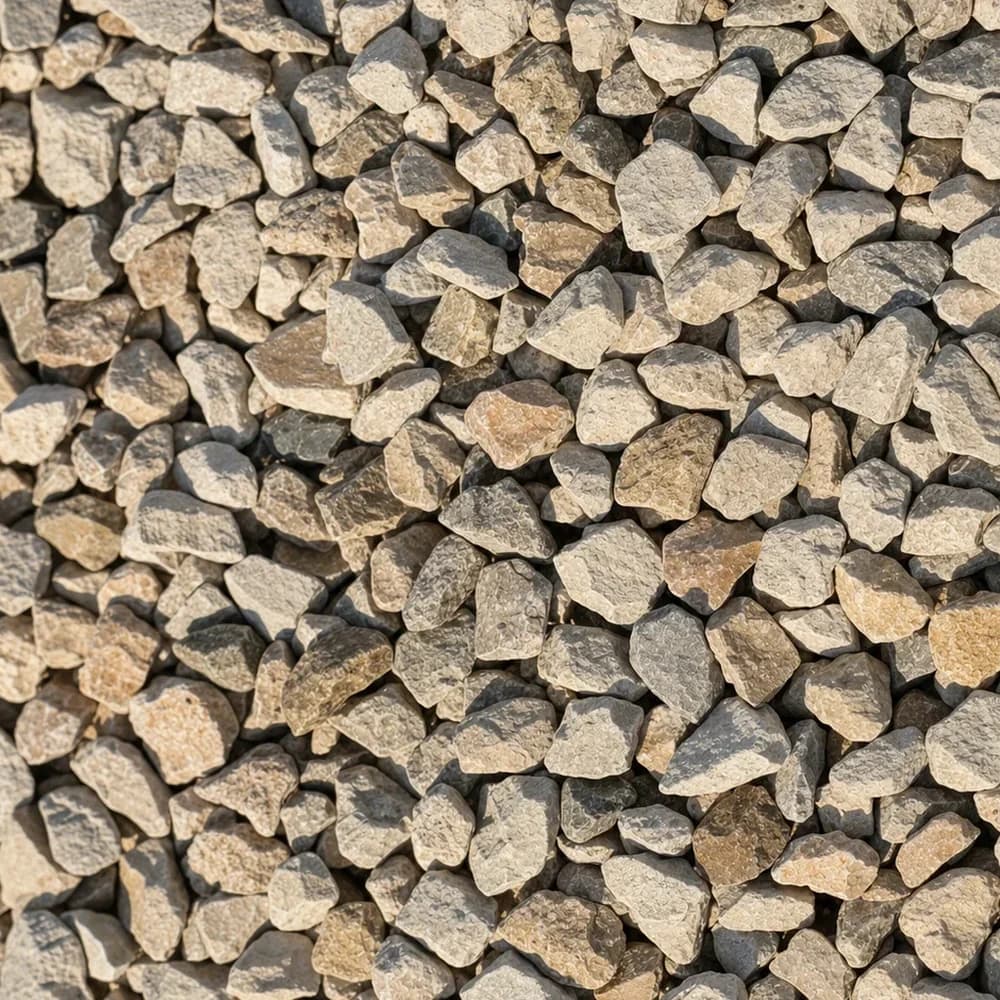
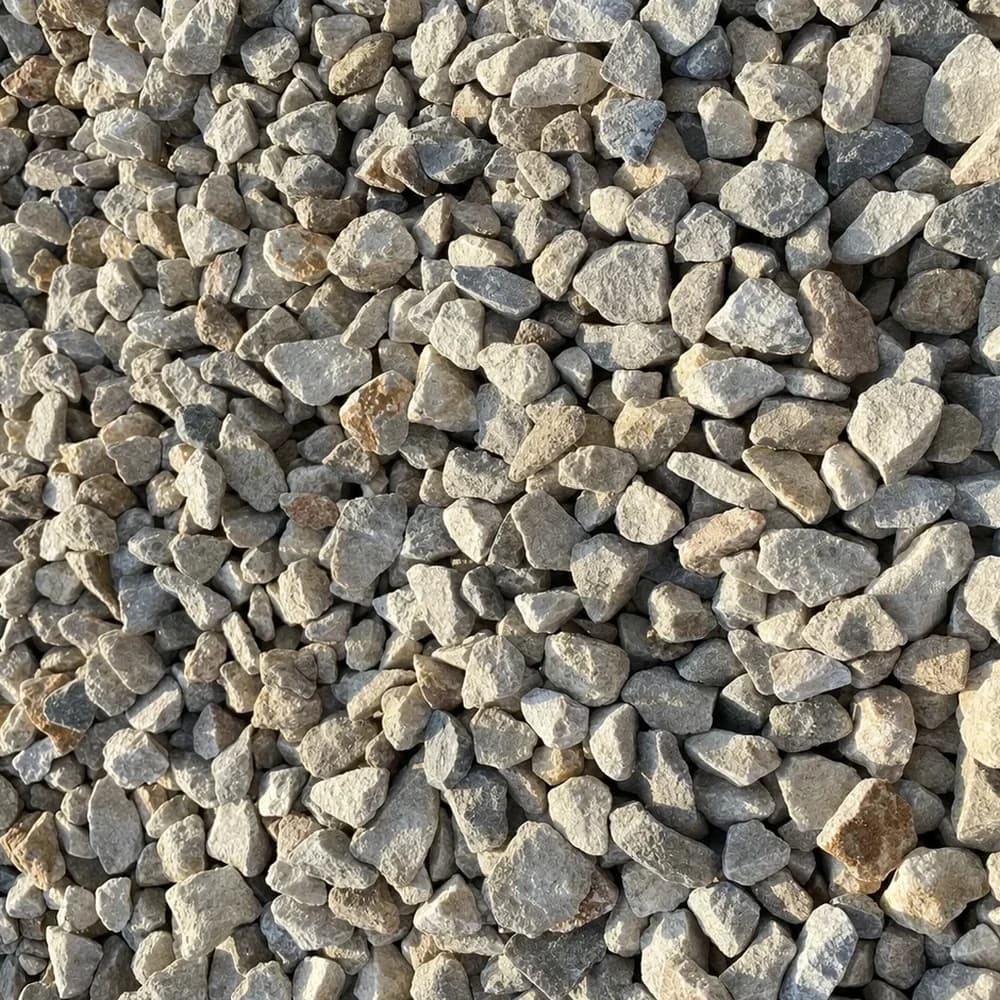
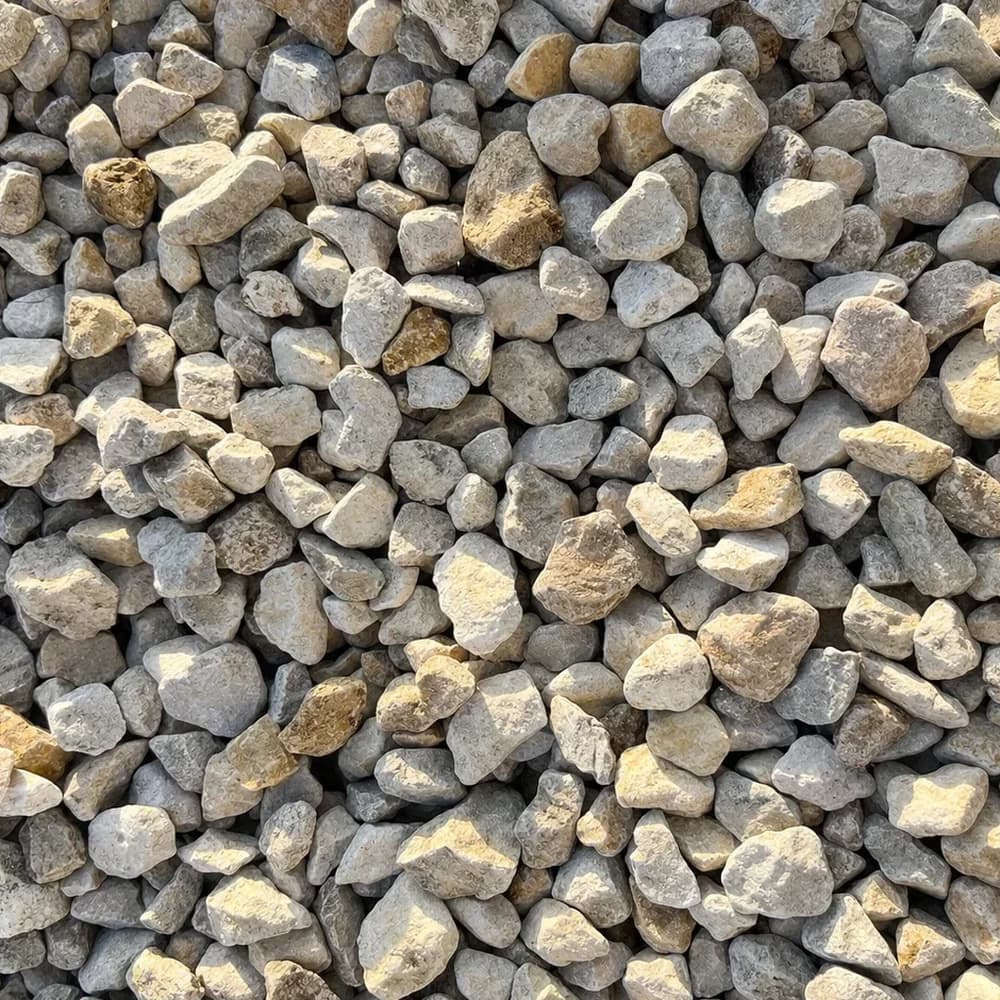
- Type: Angular crushed stone
From $427 for 1 ton, delivery included (larger loads cost significantly less per ton)
Free delivery included
Free delivery anywhere in Missouri
Pick a delivery date
Weekday delivery, earliest Oct 30
“Decided on crushed stone from them and it was solid material. Ordering was no hassle, and I'd definitely use them again.”
Tony J. · Verified Buyer
Get a Free Quote
Fill out the form and our sales team will get back to you within the hour.
Size and Grading
- Size
- About 3/4 inch to 1-1/2 inches
- Grading
- #4
- Type
- Angular crushed stone
The decision behind most orders of this size is not really about stone. It is about a spot that will not hold: the back corner of a yard on northern claypan where water perches all winter, the low end of a field entrance that ruts every spring, the strip under a downspout that has been washing out since the house was built. Somebody has already tried a few inches of the usual gravel there and watched it disappear. What follows is whether #4 crushed stone fixes it, and where it does not.
Do I need 3/4 to 1-1/2 inch stone, or a smaller washed grade?
The grading is #4, which puts the pieces at roughly 3/4 to 1-1/2 inches, all angular, with no fines in the mix. The voids between pieces are large enough that water moves through fast and that soft ground cannot swallow the layer whole, because each stone is too big to be pushed aside individually.
Go smaller, to a 3/4 inch or 1 inch washed grade, when the job is a trench, a pipe bed, or any drainage run where the stone needs to pack neatly around something. Those grades are easier to shovel and kinder to walk on. Stay at #4 when the ground itself is the problem: saturated claypan, a wet approach that has rutted, or a slope where runoff is cutting. The whole reason for the size is that it does not move when smaller stone would.
What happens when #4 crushed stone goes under a shed pad?
It becomes the bridging lift, which is a different job from a base. Lay separation fabric over the shaped subgrade, tip this stone on it, level it and track over it with a machine to seat the pieces. What you end up with is a stable platform sitting on top of the soft ground rather than sinking into it, with fabric stopping the clay working up between the stones.
That platform is not the pad. Above it goes a fines-bound course such as Base Rock, compacted in lifts, and then whatever surface the shed sits on. Skipping the upper layer leaves you standing on loose rock that rolls underfoot and will not take a load evenly.
On cherty Ozark ground the bridging lift is often unnecessary. Dig down past the chert and the bottom is already firm, so the money is better spent on drainage than on depth.
Will a rock garden bed of 3/4 to 1-1/2 inch stone stay looking right?
For a xeriscape or rock garden bed, this size holds its appearance better than most people expect, with two conditions. It needs fabric under it, or the bed will sink into the soil over a couple of wet seasons and read as mud with stone in it. And it needs an edge, particularly on a slope, because angular stone creeps far less than rounded stone but it still travels when a mower or a storm gets at it.
Three inches is plenty of depth for a bed. What you will not get is a soft, tidy look: the pieces are big, sharp and irregular, so the effect is rugged rather than neat. If the bed is meant to look considered, rounded River Rock gives you a smoother read at a similar size.
Can it take the hit where a downspout dumps a roof's worth of water?
Yes, and this is one of the jobs it handles well. A Missouri summer storm can put an inch through a roof in twenty minutes, which is a surprising volume arriving at one corner of the house. Fine gravel in that spot scatters. Soil gullies.
Build the splash area as a shallow dished apron, fabric down first, four inches of this stone over it, running away from the foundation on a fall rather than sitting level against it. The size absorbs the impact and the voids take the volume. What it will not do on its own is solve a wet basement: the water still has to go somewhere once it is through the stone, and on claypan that usually means a line to daylight.
How many tons for a 12 by 16 pad and a splash apron?
Two hypothetical examples, worked through.
A shed pad 12 by 16 feet with a six inch bridging lift: 12 x 16 is 192 square feet, and six inches is half a foot, so 192 x 0.5 gives 96 cubic feet. Divide by 27 and that is 3.56 cubic yards. This site publishes about 2,900 lb per cubic yard for the #4 and ballast family, roughly 1.45 tons per yard, so 3.56 x 1.45 works out at about 5.2 tons.
A downspout splash apron 6 feet by 3 feet at four inches: 18 square feet x 0.333 feet is 6 cubic feet, which is 0.22 cubic yards, or about a third of a ton. Small orders like that are usually worth combining with something else on the same delivery.
A rock garden bed 20 by 8 feet at three inches is 160 square feet x 0.25, so 40 cubic feet, 1.48 cubic yards, and about 2.1 tons.
Run your own figures through the stone calculator, which carries depth guides and a five percent allowance for uneven ground that is on by default. Spreading is a machine job more often than not: a bucket or a skid steer moves it quickly, and while a wheelbarrow and a fork will handle a small apron, a five ton pad by hand is a long weekend.
Where the pile should land if the work is behind the house
Think about the drop before you think about the date. Coarse stone is heavy to move twice, so aim for a spot as close to the work as a loaded truck can safely get and still turn around, on ground firm enough to hold it after rain.
Delivery is arranged at checkout from your ZIP code, and the truck needs clear access to somewhere it can tip. If the only route to the back of the property crosses a soft yard, or the gate is tighter than it looks, raise it through the contact page first and agree a drop spot rather than finding out on the day. When the quantity looks right, pick an amount and a delivery date here on the product page.
Quickly Calculate How Much You Need
Material: #4 Crushed Stone
How to Measure
Measure the length and width of your project area in feet
Decide on depth in inches (2" for landscaping, 4" for driveways)
Enter the values above and we'll calculate the tonnage you need
Need help figuring out the right amount? We can help!
Call or text us at (314) 501-6558 and we'll help you calculate the right quantity for your project.
Not sure how much you need? The Stone Calculator has depth guides, coverage charts and worked examples for this material.
Frequently Asked Questions About #4 Crushed Stone
Customer Reviews
Great Experience
The process with Missouri Rock Supply was clear and easy to follow. I got the result I wanted with the #4 crushed stone. The order was easy to arrange, and I am pleased with the outcome.
Wendy M. · Columbia, MO · Verified Buyer
Needed crushed stone for a driveway spot, and ordering with these guys was simple. The free delivery was a huge plus, and everything showed up right where I needed it.
Christine W. · Independence, MO · Verified Buyer
Had crushed stone delivered by this company, they kept me updated the whole time and the driver was friendly and careful about where he placed it.
Michelle W. · Columbia, MO · Verified Buyer
Decided on crushed stone from them and it was solid material. Ordering was no hassle, and I'd definitely use them again.
Tony J. · Kansas City, MO · Verified Buyer
Picked up on a quick order from the team, and the crushed stone was exactly what I needed.
Laura V. · O'Fallon, MO · Verified Buyer
#4 Crushed Stone has 5 verified customer reviews with an average rating of 4.8 out of 5.
#4 Crushed Stone delivery across Missouri
- Kansas City
- St Louis
- Springfield
- Columbia
- Independence
- Lees Summit
- Ofallon
- St Charles
- St Joseph
- St Peters
- Blue Springs
- Joplin