River Rock for Missouri Beds, Drip Lines and Dry Creeks
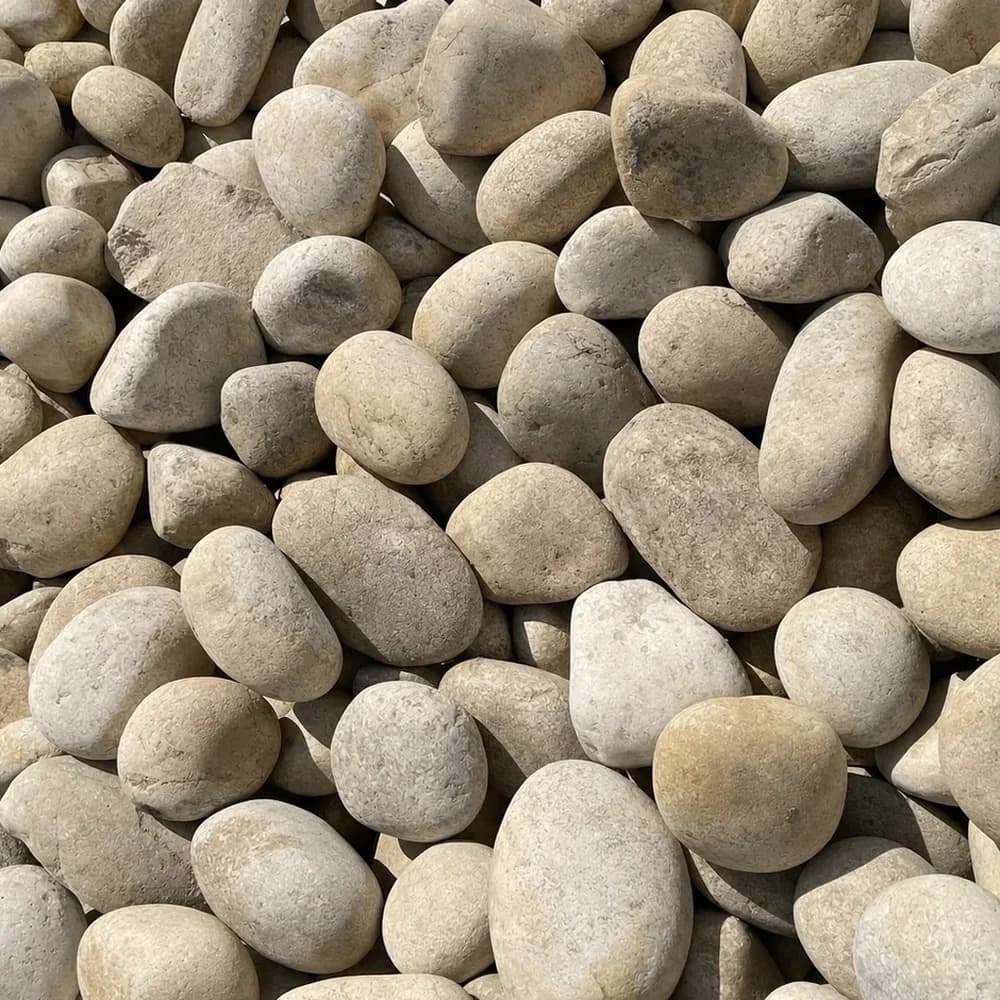
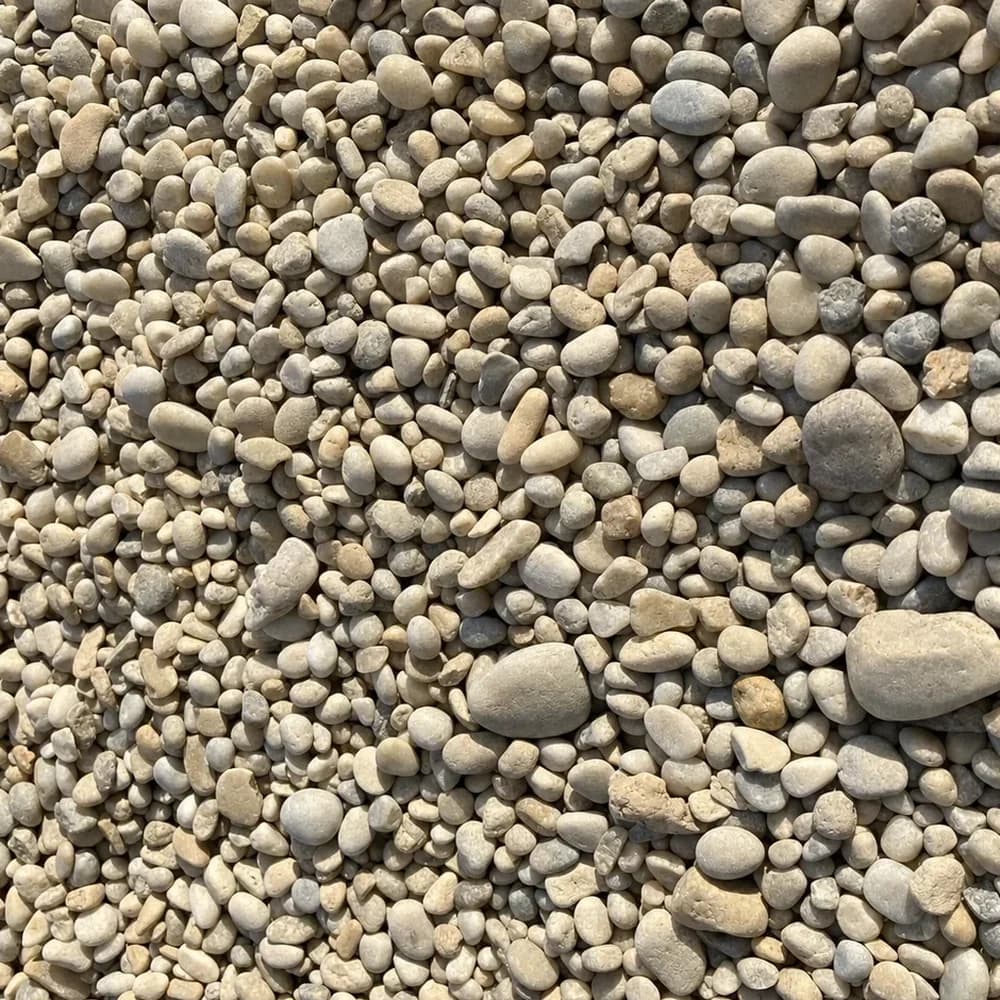
River Rock shows its naturally smooth, rounded surface over time, bringing varied natural color to Missouri drainage details and decorative landscape areas.
- Size: 1 inch to 3 inches
- Type: Smooth, naturally rounded stones
- Color: Tans, grays, browns and occasional reds
From $796 for 1 ton, delivery included (larger loads cost significantly less per ton)
Free delivery included
Free delivery anywhere in Missouri
Pick a delivery date
Weekday delivery, earliest Oct 30
“Got River Rock delivered from these guys and it looked great, really happy with it. I'd definitely order again and recommend them to anyone needing material delivered.”
Debbie J. · Verified Buyer
Get a Free Quote
Fill out the form and our sales team will get back to you within the hour.
Size and Grading
- Size
- 1 inch to 3 inches
- Type
- Smooth, naturally rounded stones
- Color
- Tans, grays, browns and occasional reds
Come back to a bed on a sloping Ozark lot after one of those June storms that drops an inch in twenty minutes and half the mulch is out in the lawn in a fan shape, pointing at the driveway. That is the moment most river rock gets ordered. The material is smooth, naturally rounded stone running from one inch to three inches, in tans, grays and browns with the occasional red in the mix, and its advantage over bark is simply that fast water cannot pick it up and carry it off.
The mulch bed that washes into the yard every June storm
Three places on a Missouri property ask for this treatment more than anywhere else.
The strip under a pole barn or equipment shed eave, where roof runoff has trenched a line into the ground and splashes mud up the siding, is the classic one. A band of rounded stone takes the impact, lets the water through, and stops the splash.
Foundation beds on the uphill side of a house do the same job on a smaller scale, and they stop bark mulch piling against the siding every time it rains.
A dry creek line is the third, and it rewards care more than the other two. Run it along the route water already takes, not along the route that would suit the garden plan. Stone does not create a drainage path, it dresses and protects one that exists.
How rounded stone behaves on chert slopes and river-bottom ground
Rounded stone rolls. That single fact explains most of what it does well and everything it does badly.
On a chert slope in the Ozarks, stone laid on a steep grade will creep downhill over a few seasons unless something holds the bottom edge. On the deep silt and clay of the river bottoms and the Bootheel, the ground softens in a long wet spell and the stone presses down into it, so within two years the bed reads as stone-speckled mud rather than a rock bed. On northern claypan, water perches under the bed instead of draining through it, which is worth knowing before you assume a rock bed solves a wet corner. It does not. It only survives one.
The two jobs it cannot do are worth stating plainly. A single-car gravel driveway surfaced with rounded stone never firms up: the pieces roll under a tire, throw out to the edges, and leave a rutted middle. That drive wants Driveway Gravel over a compacted base. Filling the gaps in a flagstone walkway with one to three inch rounded stone gives you an ankle turn at every step, and that job wants Screenings or a fine gravel.
Fabric, edging and the depth that keeps 1 to 3 inch stone home
Three details separate a bed that still looks right in three years from one that does not.
Fabric goes down first, lapped at the seams and pinned, on soil that has been raked level and cleared of anything that will grow back. It is there to stop the stone sinking into the soil as much as to stop weeds coming up. It will not stop seed blowing in on top and germinating in the dust that collects between the stones, which is a job for an occasional weed pass rather than for more fabric.
Edging is what keeps the stone out of the lawn, and on any Missouri slope it is not optional. Steel, stone or a cut trench edge all work. Cut the edge deeper on the downhill side.
Depth is a balance. Around three inches covers the ground properly and holds together. Much less and the fabric shows through the first time somebody walks across it. Much more and the top layer simply rolls whenever it is disturbed.
River Rock against Large River Rock and pea gravel
Three rounded materials, three different jobs.
At one to three inches, this is the middle size. It is big enough to stay put in a bed and under a downspout, small enough to shovel and rake, and it reads as a finished surface rather than as individual boulders.
Large River Rock steps up in weight, which is what you want for a dry creek bed that actually runs hard in a storm, for heavier erosion work and wherever the smaller stone has already moved once. It is placed by hand or bucket rather than raked.
3/8" Natural Pea Gravel goes the other way: small, rounded, comfortable to walk on, and the choice for a play area or a path. It also migrates the most, so give it a firm edge everywhere.
Yardage for a drip line around a 40 by 60 pole barn
Take a 40 by 60 foot pole barn with a three foot stone apron all the way round at three inches deep. The outer rectangle is 46 by 66, which is 3,036 square feet. Subtract the 2,400 square feet of building footprint and the apron itself is 636 square feet. At three inches, that is 636 x 0.25, or 159 cubic feet, and 159 divided by 27 is 5.9 cubic yards.
A 12 by 8 foot foundation bed at the same depth is 96 x 0.25, or 24 cubic feet, which is 0.89 cubic yards.
This site publishes about 2,700 lb per cubic yard for river rock at 1 to 3 inches, roughly 1.35 tons to the yard and approximate, so the barn apron comes out at 5.9 x 1.35, close to 8 tons, and the foundation bed at 0.89 x 1.35, about 1.2 tons.
Stone ships by the ton, so run the cubic yards through the river rock calculator to get the order weight, and tick the five percent extra if the ground is uneven. Then pick a quantity and a delivery date on this page. Missouri Rock Supply arranges delivery at checkout from your ZIP code, and the truck needs clear access to somewhere it can tip, which is worth thinking about if the only route to the back of a pole barn is across a soft yard.
Quickly Calculate How Much You Need
Material: River Rock
How to Measure
Measure the length and width of your project area in feet
Decide on depth in inches (2" for landscaping, 4" for driveways)
Enter the values above and we'll calculate the tonnage you need
Need help figuring out the right amount? We can help!
Call or text us at (314) 501-6558 and we'll help you calculate the right quantity for your project.
Not sure how much you need? The River Rock Calculator has depth guides, coverage charts and worked examples for this material.
Frequently Asked Questions About River Rock
Customer Reviews
Needed River Rock for a backyard project and the team gave me a fair price for a good load. The driver was friendly and careful about where he placed it, which made the whole thing easy.
Hank G. · Lee's Summit, MO · Verified Buyer
Needed River Rock for a backyard cleanup and ordered from them. The River Rock was spot on, clean and exactly what I was hoping for. Delivery was easy and I'd definitely use them again.
Rob N. · Lee's Summit, MO · Verified Buyer
Got River Rock delivered from these guys and it looked great, really happy with it. I'd definitely order again and recommend them to anyone needing material delivered.
Debbie J. · St. Louis, MO · Verified Buyer
Got River Rock from them with free delivery, and the driver was friendly and careful about where he placed it.
Luis E. · Kansas City, MO · Verified Buyer
Had River Rock delivered by these guys and it looks great. Pricing was fair too, definitely felt like good value.
Greg N. · Kansas City, MO · Verified Buyer
River Rock has 5 verified customer reviews with an average rating of 5 out of 5.