Screenings: the 1/4 Inch Minus Setting Course for Missouri Patios
Also sold as #10 Stone Screenings
Also known as: ag lime dust
At the top of a Missouri patio build, Screenings provide a level finish layer beneath pavers, bricks, or natural stone.
- Size: 1/4 inch minus
- Grading: Stone dust and fine particles
- Type: Angular crushed stone
From $453 for 1 ton, delivery included (larger loads cost significantly less per ton)
Free delivery included
Free delivery anywhere in Missouri
Pick a delivery date
Weekday delivery, earliest Oct 30
“Got Screenings from Missouri Rock Supply and everything went smooth. They delivered when they said they would, which I really appreciated. Price was fair too, I'd order from them again.”
Debbie L. · Verified Buyer
Get a Free Quote
Fill out the form and our sales team will get back to you within the hour.
Size and Grading
- Size
- 1/4 inch minus
- Grading
- Stone dust and fine particles
- Type
- Angular crushed stone
Ask three people around a Missouri jobsite what screenings are and you will get crusher run, mason sand and something the county road crew uses. None of those is right, and the confusion costs patios. Crusher run carries 3/4 inch stone in it and will never bed a flagstone flat. Mason sand stays loose forever and washes out of a joint in the first thunderstorm. Screenings sit between them: 1/4 inch minus angular crushed stone with all the dust the crusher made still in it, which is exactly why it compacts hard and stays put where a bedding sand would not.
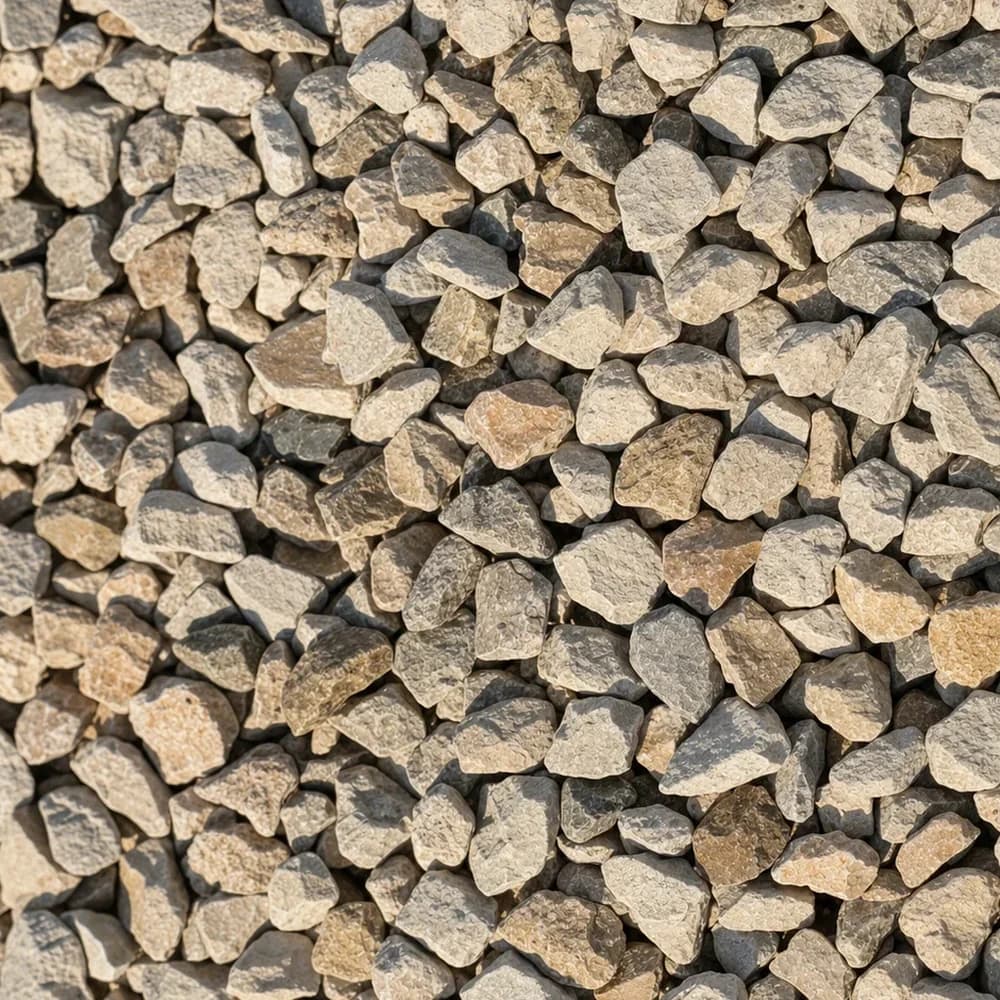
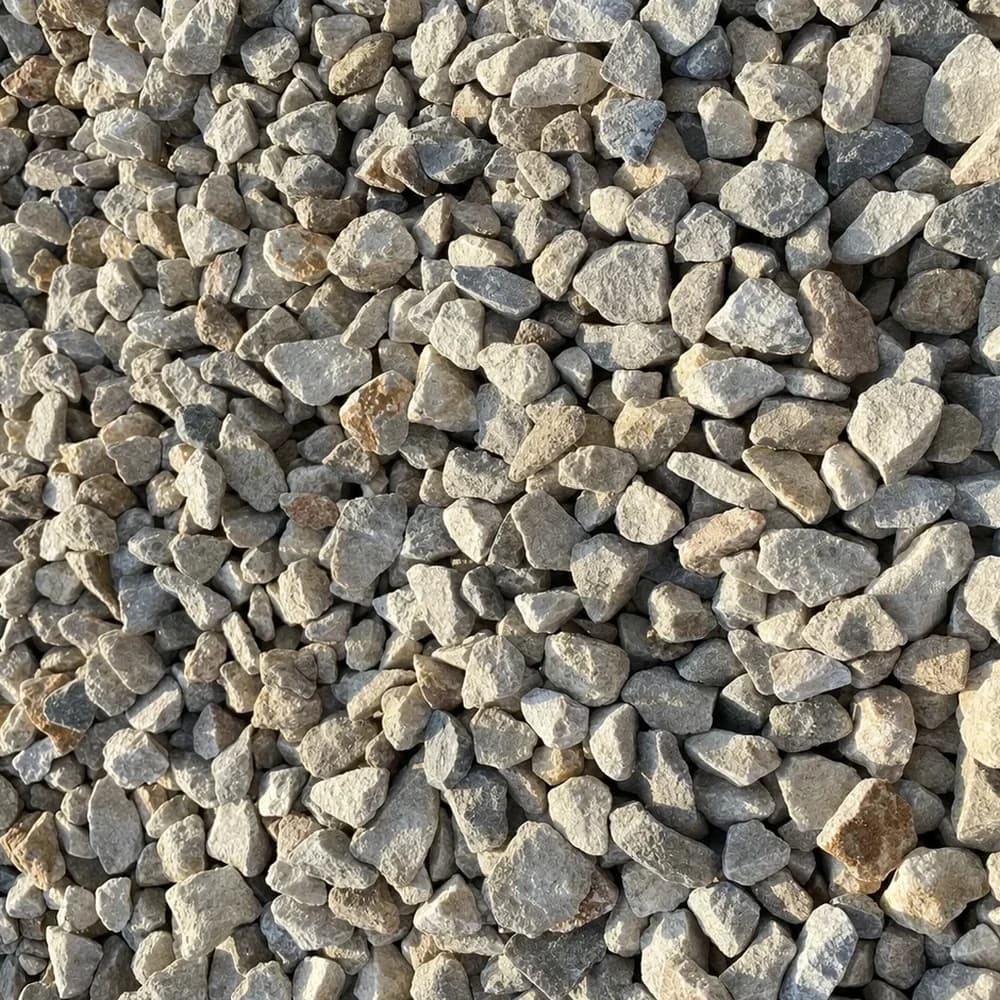
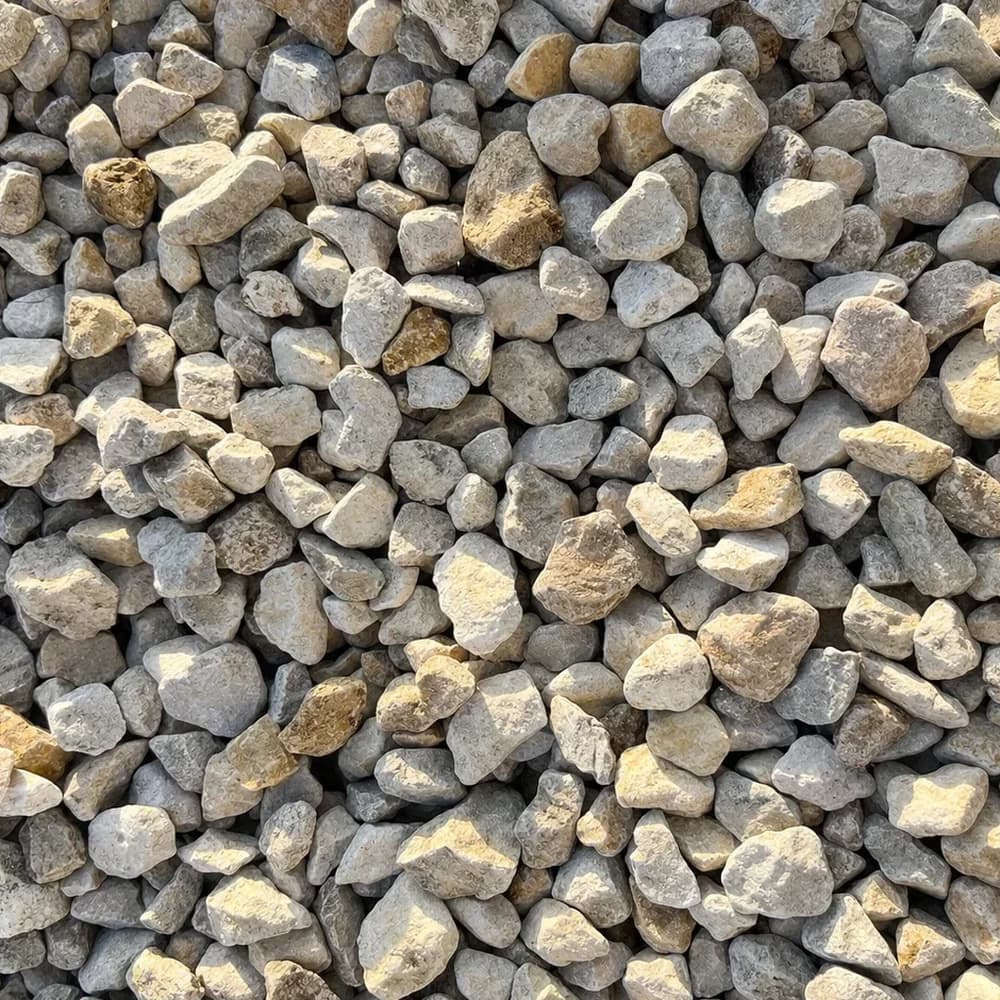
Gray, gritty and dusty: what lands on the drive
Tip a load and it looks less like stone than like coarse damp powder with grit through it. Squeeze a handful and it holds a shape. That is the fines doing their work, and it is the single property the material is bought for.
The color runs gray through to buff depending on the rock it came out of, and it darkens noticeably when wet. Dry, it dusts, so a pile parked upwind of an open window is a mistake you only make once. Underfoot it is firm rather than soft, and once it has been wetted and rolled it takes a print from a boot and keeps it.
Bedding a 16 by 20 paver patio and a fire pit ring
The setting course is the classic job. The layers below take the load: a compacted aggregate base sized for the ground, then an inch of screenings screeded flat, then the pavers, then more screenings swept into the joints. The material is a leveling and locking layer, not a base in its own right, and treating it as one is how patios end up dipping in the middle after a wet Missouri March.
A fire pit surround is the same idea with fewer constraints. Pavers or flagstone set on a compacted screenings bed around a pit give you a flat, stable ring that does not shift when someone drags a chair across it, and the fines fill the irregular joints that flagstone always leaves.
Compacted paths behind a house or through a garden work too. Wetted and rolled, screenings make a surface firm enough for a garden cart or a wheelchair, which is more than a loose gravel path will ever manage.
Why a dry creek bed spits screenings out in the first storm
Here is the wrong pick, and it comes up often on Ozark lots. A dry creek line only earns its keep during the storms that drop an inch in twenty minutes and send water off a rocky slope into a narrow valley. That is moving water, and moving water lifts fines and carries them away. Put screenings in a dry creek and the first real storm takes the dust out, leaves the grit, and deposits the rest in the lawn below.
Dry creek beds want rounded stone that water cannot shift: River Rock through the channel and Large River Rock at the points where the flow actually digs. The same rule applies to a downspout outfall and to any swale that runs hard.
The other mismatch is using screenings as a base on ground that holds water. On claypan and glacial till the subsoil is dense and slow, and a screenings layer sitting on perched water goes to mush. It belongs near the top of a build, over something that drains.
An inch under pavers, two inches on a path, measured compacted
Depth here is small and worth getting exactly right. Under pavers, an inch of screed is the working number, and it wants to be uniform. Thicker is not safer: a deep setting bed has room to move, and in Missouri's freeze and thaw cycles, which hit hardest north of the river, a thick bed will ripple where a thin one holds. Screed it, do not compact it before the pavers go down, then compact through the pavers afterwards.
For a compacted path or a fire pit ring, two inches after compaction is the sensible target. Put it down in one lift, wet it until it is damp rather than muddy, and roll or plate it. Water is not optional. Dry screenings compact to about half of what damp screenings will.
Tons for a 16 by 20 patio bed and a 14 foot fire pit ring
Both examples are hypothetical, and both start from area.
A 16 by 20 foot patio is 320 square feet. An inch of setting bed is 1/12 of a foot, so 320 divided by 12 gives 26.7 cubic feet, and 26.7 divided by 27 is 0.99 cubic yards. Screenings run about 2,900 lb per cubic yard on this site's published figures, roughly 1.45 tons per yard, so that is about 1.4 tons.
A fire pit ring 14 feet across with a 4 foot pit in the middle is a circle minus a circle. Pi over four times 14 squared is 153.9 square feet; the same for the 4 foot pit is 12.6. The ring is 141.3 square feet. At two inches, 141.3 divided by 6 is 23.6 cubic feet, or 0.87 cubic yards, which is about 1.3 tons.
Run your own numbers through the paver base calculator for the bedding course, or the stone calculator if you want the tonnage for a path, and keep the allowance each adds by default (ten percent on the paver base calculator, five percent on the stone calculator) where the subgrade is uneven.
What sits under a Missouri patio build, and what fills the joints above
Below a patio, the base is 3/4" Crushed Stone or a compacted Crusher Run course, depth set by the ground and the load. Above, the joints take more of the same screenings swept in and watered, or a finer material where the joints are tight.
If you are bedding a walkway rather than a patio, a fine gravel like Walkway Gravel makes the surface and screenings make the bed beneath it. Once you know your tonnage, pick an amount and a date on this page. Missouri Rock Supply works delivery out at checkout from your ZIP, and the driver needs somewhere firm and clear to tip, ideally close to the patio rather than at the end of the drive.
Quickly Calculate How Much You Need
Material: Screenings
How to Measure
Measure the length and width of your project area in feet
Decide on depth in inches (2" for landscaping, 4" for driveways)
Enter the values above and we'll calculate the tonnage you need
Need help figuring out the right amount? We can help!
Call or text us at (314) 501-6558 and we'll help you calculate the right quantity for your project.
Not sure how much you need? The Stone Calculator has depth guides, coverage charts and worked examples for this material.
Frequently Asked Questions About Screenings
Customer Reviews
Ordered Screenings from this company and the whole thing was painless. Free delivery was a huge plus, and everything showed up right when I needed it.
Gina G. · Kansas City, MO · Verified Buyer
Ordered Screenings from these guys and it was simple from start to finish. Delivery showed up when expected and the pile looked great, really happy with it.
Brian K. · St. Louis, MO · Verified Buyer
Got Screenings from Missouri Rock Supply and everything went smooth. They delivered when they said they would, which I really appreciated. Price was fair too, I'd order from them again.
Debbie L. · Kansas City, MO · Verified Buyer
Had them bring out a load of Screenings and I'm really happy with it. The Screenings was great quality, clean and easy to work with. Pricing felt fair too, definitely good value.
Bill G. · O'Fallon, MO · Verified Buyer
Screenings has 4 verified customer reviews with an average rating of 5 out of 5.