River Rock Calculator: Stone Size Decides the Depth
Enter your project dimensions
The choice being made on this page is rarely how many tons. It is which size of rock goes in the bed, because that single decision doubles or halves everything that follows. Around a Missouri foundation or down a dry run that takes storm water off an Ozark slope, one-inch stone lies two inches deep and three-inch stone wants four or more. The area on your tape does not move. The tonnage does.
Where a Bed Estimate Stops Being Arithmetic
The river rock calculator is exact about volume and honest about nothing else. It cannot see that the bed you measured has a shrub in the middle of it, that the ground falls away at the back corner, or that the stone will settle into bare soil over a couple of seasons until the bed reads thin. Volume it can do. Those three things are yours.
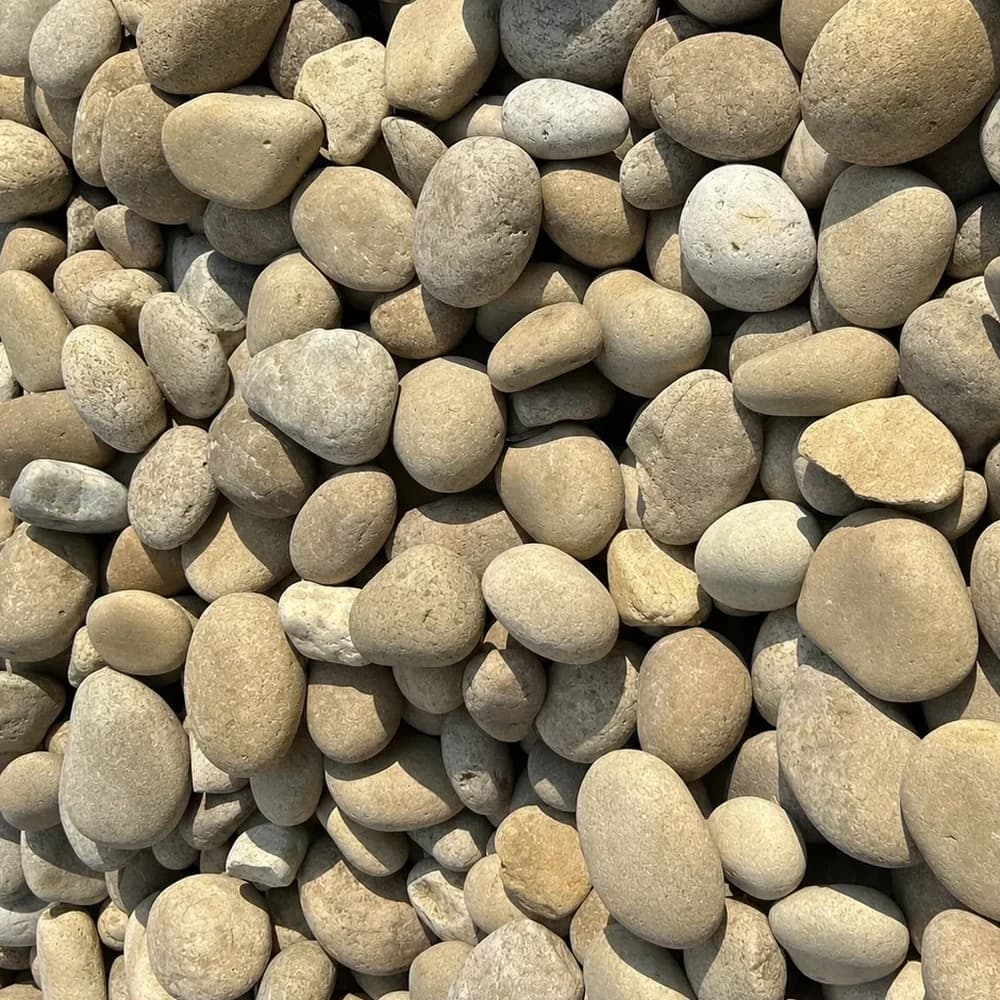
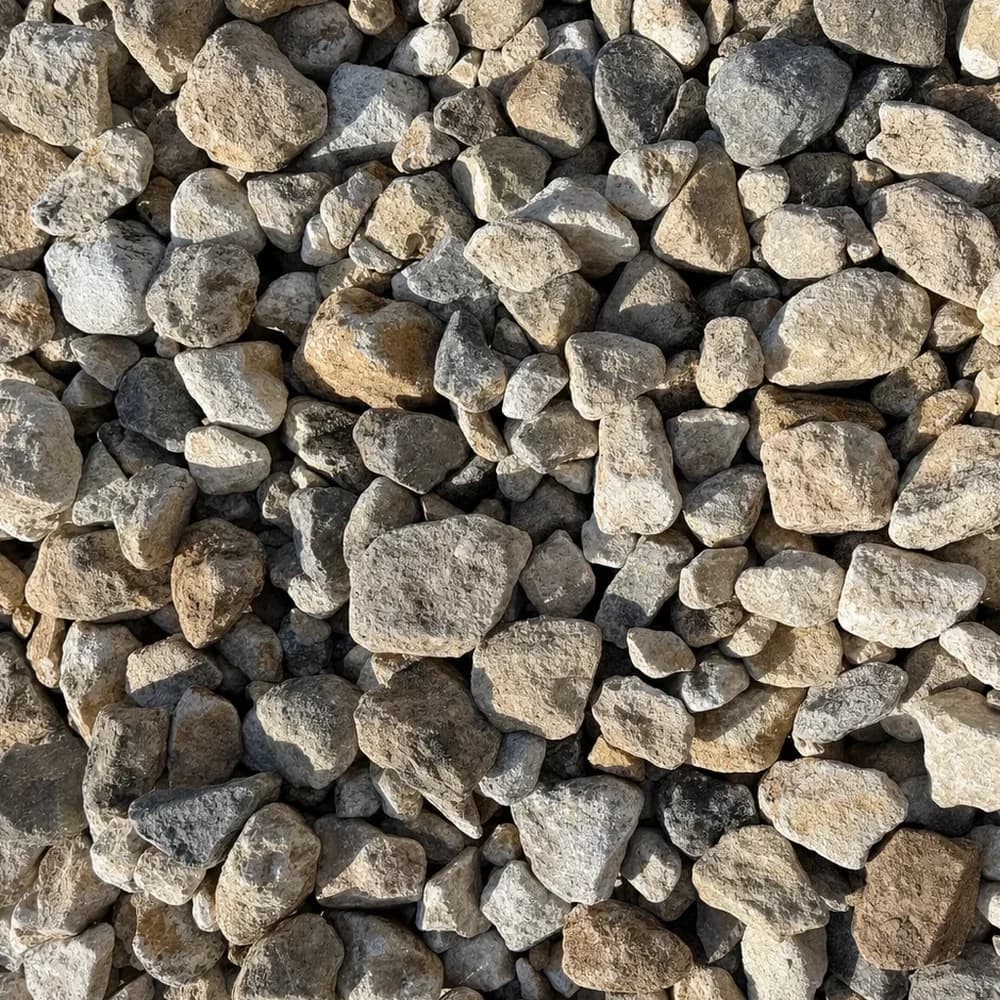
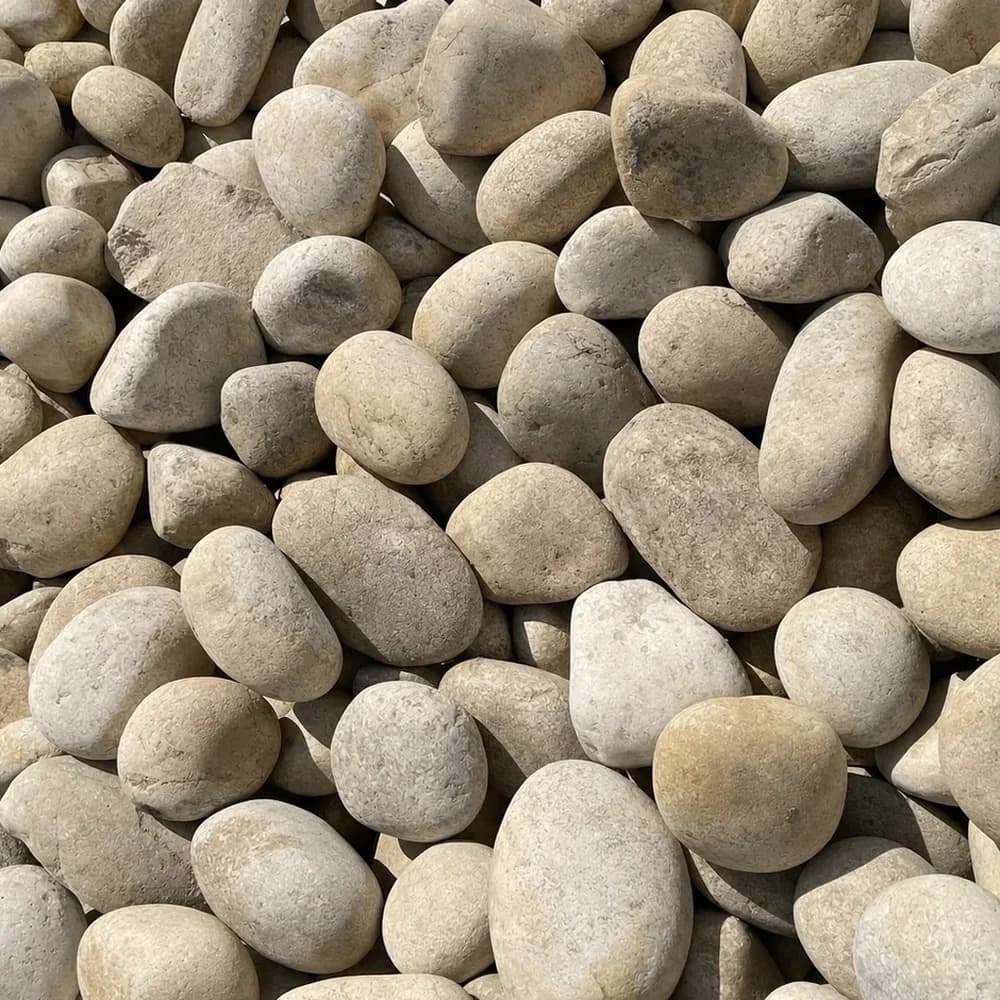
So the useful order of work is: fix the stone size, set the depth from that size, then measure. The rule from the depth guidance is a layer about twice the diameter of the stone. Three-quarter to one-inch rock takes two inches. One to three-inch rock takes three. Two to four-inch pieces want four to five. Pick a depth below those and fabric or soil starts showing through, which reads as a short delivery when it is really a thin specification.
A Yard of River Rock Weighs About 2,700 Pounds
That is 1.35 tons to the cubic yard, the figure this site publishes for one to three-inch material, and it is what the tool applies. Turn it around and a single ton is roughly three-quarters of a yard, near enough 20 cubic feet of stone. Spread two inches deep that ton reaches about 120 square feet; at three inches about 80; at the four to five inches large pieces need, closer to 53.
That is worth holding onto before the load arrives, because a ton of rounded stone makes a smaller heap than people expect and the first reaction to the pile is usually that something is missing. Cubic yards on the result tell you the size of the heap. Tons are what you buy.
Feeding a Dry Creek Run and a Tree Ring Into the Tool
Rectangle, circle, or up to five separate areas totaled together. Length, width and diameter in feet; depth in inches from 0.25 up to 24. Choose the material, and there is an optional tick box that adds five percent for compaction and spillage. Calculate returns cubic yards, tons and cubic feet, and an email field will send them to you.
A border that runs along two sides of the house goes in as two rectangles under multiple areas. A dry creek run that widens at a bend is better entered as two or three sections, each with its own average width, than as one long guess. For a ring around a tree, take the circle for the outside, run the trunk area as a second circle, and subtract the smaller from the larger.
A Downspout Splash Run, a Foundation Border and a Fire Pit Ring
Hypothetical sizes, not customer jobs. All three use one to three-inch stone at three inches.
Four downspout splash pads, each 5 by 3 feet.
- 60 sq ft x 3 / 12 = 15 cu ft
- 15 / 27 = 0.56 cu yd, which at 1.35 is 0.75 tons
A foundation border, 62 feet along the wall by 3 feet out.
- 186 sq ft x 3 / 12 = 46.5 cu ft
- 46.5 / 27 = 1.72 cu yd, or 2.3 tons
A ring around a fire pit, 16 feet across with a 4-foot pit in the middle.
- Outer circle 201.1 sq ft, less the 12.6 sq ft pit, leaves 188.5 sq ft
- 188.5 x 3 / 12 = 47.1 cu ft, so 1.75 cu yd, or 2.4 tons
Lay non-woven fabric first and pin it, except where the stone is carrying active drainage, in which case the fabric wraps the stone rather than sitting under it. Pitch a foundation bed gently away from the wall. Hose the rock down once it is spread, since quarry dust dulls the color until it is rinsed off.
Keeping Half a Ton Back for the Spring Storms
Heavy spring and summer thunderstorms are the thing that rearranges a decorative bed in this state. Water coming off a roof valley or down a hollow will shift rounded stone out of the bed and leave a bare patch at the top of the run, and the fix is a wheelbarrow of the same rock rather than a new order. Round the tonnage up to the next half ton and keep what is left where you can reach it.
Two neighboring materials are sized elsewhere. River Rock and Large River Rock are decorative and belong here. Broken armor stone for a creek bank or a pond dam is a different product at a different weight, and the rip rap calculator handles it. Angular washed stone for a French drain, drain rock included, is figured on the stone calculator. When the tons look right, pick a quantity and a date on the product page. Delivery is arranged at checkout by ZIP code and the truck needs clear access to a dump spot, and any question about size choice can go through the contact page.
Common questions
How do I size a circle such as a fire pit surround or a tree ring?
Use circle mode and enter the whole distance across the outside of the ring. Then run the pit or the trunk as a second, smaller circle and take it off the first. A 16-foot ring around a 4-foot pit is 201.1 square feet less 12.6, so 188.5 square feet of actual stone.
How do I run the numbers on paper before I order?
Multiply the square footage by the depth in inches, divide by 12 for cubic feet, divide by 27 for cubic yards, then multiply by 1.35. Quick sanity check the other way: one ton is about 20 cubic feet, so at three inches deep it covers roughly 80 square feet.
Three inches of river rock and three inches of clean rock over the same bed. Why are the tons different?
Because a yard of each weighs a different amount. The volume is identical, but rounded river rock is figured at about 2,700 pounds a yard and angular washed stone at about 2,800, so the crushed material always comes out a little heavier for the same hole.
Is the five percent tick box enough on a rock bed?
For spillage and for stone that rolls off the wheelbarrow, yes. It will not cover rock settling down into bare soil over a season, which is what fabric is for, and it will not cover a bed you measured two feet short at the far end.
The bed runs down a bank towards the creek. What do I measure?
The sloping face, taken with the tape lying on the ground, not the flat distance you would see from above. A bank also wants the deeper end of the depth range, because rounded stone creeps downhill and the top of the run thins out first.
Related calculators
Rock beds are a one-time buy.
River rock, large river rock and drain rock by the ton, free delivery included.