Mulch Calculator: Bed Depth First, Then Yards
Enter your project dimensions
The correction this page makes most often is depth. A Missouri bed that spent the winter with water sitting on a clay subsoil does not want five inches of mulch on top of it in April, and a tree that gets a cone of shred piled against its bark does not want any. Three inches over bare ground and two over a raked-out old layer is what the mulch calculator is set up to serve, and those two numbers change an order more than any measuring trick. Get the depth right, then measure the beds.
Why Three Inches Suits a Missouri Bed and Five Does Not
Beds over the dense clay subsoils of the north and the west-central plains drain slowly, and a thick, damp mulch layer over slow ground keeps air away from roots for weeks. Thin, cherty Ozark beds have the opposite problem: they dry hard in a July heat spell, which is the case for a full three inches rather than a token inch.
Four inches is the ceiling in either place. Keep the layer 3 to 6 inches clear of a tree trunk so the ring is a flat donut with bark showing, and keep 6 inches of clear siding at the house with the depth nearer 2 to 3 inches in the beds against it.
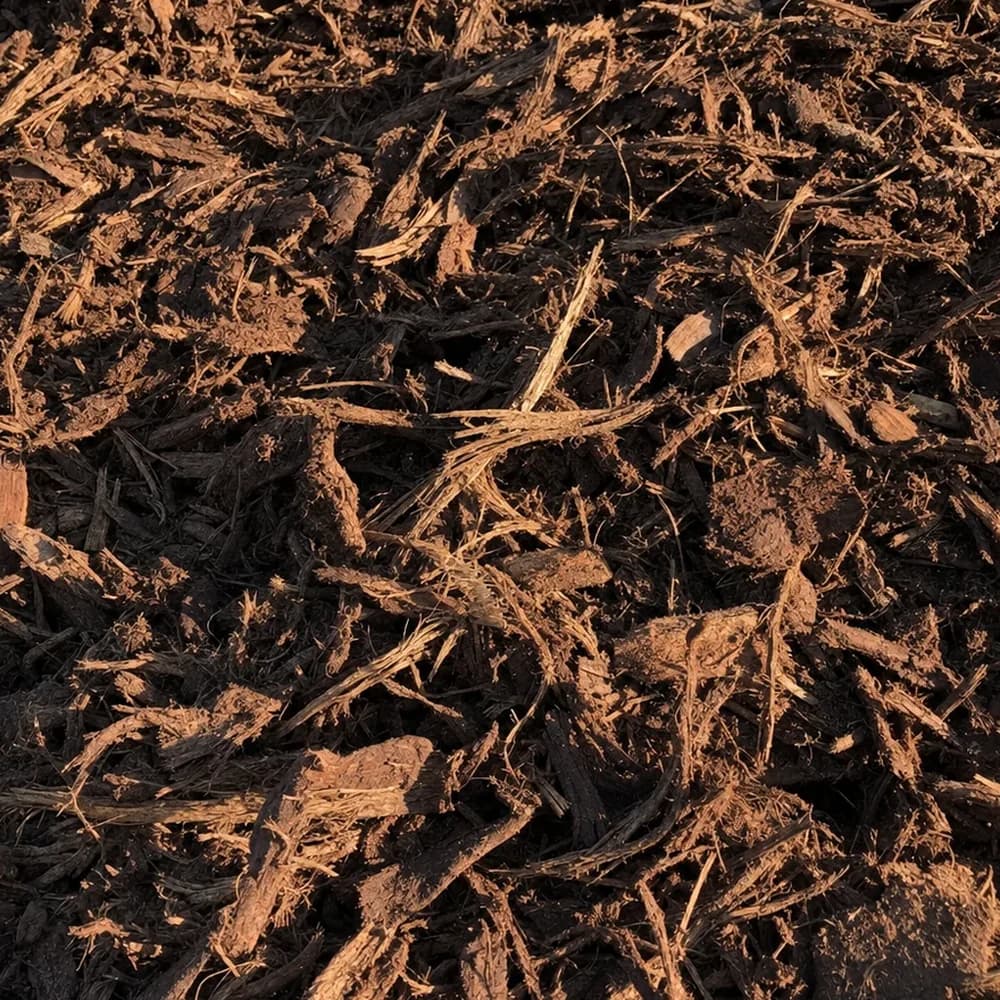
Slope changes the choice of material more than the depth. Shredded hardwood knits together and will sit on a gentle grade, while chips and nuggets float and scatter when a summer thunderstorm drops an inch in twenty minutes. On a bank that runs hard after storms, shred is the safer order.
Adding Up Beds and Tree Rings in the Mulch Calculator
Measure each bed in feet and hold the tape against the ground rather than level. Rectangle mode handles a straight run along the house. Circle mode wants the diameter, which suits tree rings and island beds. Multiple areas totals up to five separate pieces in one calculation, so the front beds, the rings and an island go in together.
Depth goes in as inches and accepts 0.25 to 24. Select the material, and there is an optional box that adds 5 percent for compaction and spillage. Calculate returns cubic yards, tons and cubic feet. For anything wider than about five beds, run the front of the house as one calculation and the back as another, then add the yardage by hand.
A curved bed does not need geometry. Run the tape along its length down the middle, average three or four widths across it, and treat it as a rectangle. The error in that method is smaller than the error in guessing a depth.
A Yard Is 27 Cubic Feet, Which Is 13.5 Bags
Cubic yards are bed area in square feet times depth in inches divided by 12, all divided by 27. Bags are simpler: a cubic yard holds 27 cubic feet, so it equals 13.5 of the 2 cubic foot bags sold at a garden center, or 9 of the 3 cubic foot ones.
| Depth | One cubic yard covers | Ten 2 cu ft bags cover |
|---|---|---|
| 1 inch | 324 sq ft | 240 sq ft |
| 2 inches | 162 sq ft | 120 sq ft |
| 3 inches | 108 sq ft | 80 sq ft |
| 4 inches | 81 sq ft | 60 sq ft |
The tons figure is the one to ignore here. Shredded mulch runs about 600 lb per cubic yard, which is 0.30 tons, so a load hits its volume limit long before its weight limit and the site sells it by the yard. Compare that with the 3,000 lb a yard of crusher run weighs and the reason each material has its own calculator becomes plain.
Foundation Beds, Three Tree Rings and an Island
Worked examples with invented dimensions.
Beds along the front of the house. A 32 by 4 ft run over bare soil at 3 inches.
- 128 sq ft x 3 / 12 = 32 cu ft, which is 32 / 27 = 1.19 yd3, or about 16 bags
Three tree rings. Each 5 ft across at 3 inches, entered in circle mode.
- One ring is about 19.6 sq ft, so three are 58.9 sq ft
- 58.9 x 3 / 12 = 14.7 cu ft, which is 0.55 yd3, or about 7 bags
An island bed being refreshed. 12 ft across, raked out, topped at 2 inches.
- About 113 sq ft x 2 / 12 = 18.8 cu ft, which is 0.70 yd3, or about 9 bags
Those three come to 65.5 cubic feet, 2.43 cubic yards and roughly 33 bags. Order 2.5 yards, and the whole lot weighs about 1,500 lb.
When the Half Yard Left Over Earns Its Keep
Mulch is one of the few materials worth rounding up by a visible margin. The half yard nobody planned for goes into the bed behind the garage that was left off the list, and into the traffic line through the beds that thins out by August. Keep it tarped and spread it inside a week or two rather than letting a pile sit.
Where the material changes, so does the tool. Compost or a planting mix going into a raised bed is figured on the soil calculator, not here, and a new lawn wants the topsoil calculator instead. A stone bed under the downspouts is a different order again, sized on the river rock calculator. For a play area, use surfacing made for the purpose at the depth the equipment maker states; the loose stone option this site supplies is figured on the pea gravel calculator.
With the yardage settled, pick a quantity and a date on the shredded mulch page. Delivery is arranged at checkout by ZIP code, so clear a spot about the footprint of a small car for a three yard pile, put a tarp under it to keep fresh concrete clean, and allow half an hour or so of wheelbarrow work for every yard.
Common questions
The yards stay at 1.85 over a 200 sq ft bed whatever I pick, so why does the tonnage jump?
Volume is identical; weight is not. Three inches over 200 sq ft is 50 cubic feet, or 1.85 cubic yards, whatever goes in it. As shredded mulch at 600 lb per yard that is about 0.56 tons. The same 1.85 yards of screened topsoil is 2.0 tons and of pea gravel 2.6 tons. Mulch is ordered by the yard for that reason.
Is the compaction and spillage allowance worth using when nothing rolls a bed of shred?
It does no harm, though mulch does not compact under a compactor the way stone does. Treat it as cover for what falls off the wheelbarrow and for beds that turn out slightly bigger than the tape said. Rounding the yardage up to the next half yard does the same job.
Do I run the tape down the slope face or across the footprint on a bed cut into a bank?
The area does grow, because a sloped bed has more surface than its footprint, so run the tape down the slope face rather than measuring across it. The depth stays the same. On a steep bank, order shred rather than nuggets so a downpour does not move the layer to the bottom.
The bed wraps two sides of the house. Do I need two calculations?
No. Use multiple areas and enter each leg as its own rectangle, splitting them at the corner so the corner is not counted twice. Two legs of 26 by 3 ft and 18 by 4 ft at 3 inches come to 150 sq ft, 37.5 cubic feet and 1.39 cubic yards, about 19 bags.
Do I measure to the outside of the steel edging?
Measure to the inside face, since that is where the mulch stops. Trim the tree rings out of a lawn bed measurement too if they are counted separately, and hold the mulch back from trunks and siding rather than filling right up to them.
Related calculators
Skip the 27-bag cart.
Bulk shredded hardwood by the yard, tipped in your driveway, delivery free.