Soil Calculator: Yards of Garden Soil for Missouri Beds
Enter your project dimensions
Most beds in this state get built upward rather than dug downward, and the reason is underfoot. Cherty Ozark ground turns a spade after four inches. Claypan under the northern prairies holds water above the subsoil from late autumn into spring. Bootheel silt grows anything but sits flat and wet through the same months. So the soil calculator is usually sizing a volume you are adding on top of the native ground, not a hole you are refilling, and the depth you enter is the depth of the box or the bed rather than anything you excavated.
Fill Depths for a New Bed, an Old Bed and an Empty Planter
| What you are filling | Depth to enter |
|---|---|
| Feeding a bed that is already planted | 4 to 6 inches worked into what is there |
| A new bed at ground level | 6 inches, blended into the soil below it |
| An empty raised planter | 12 inches |
| A planter taller than 18 inches | 8 to 12 inches of blend on top, cheaper bulk below |
The last row is the one that saves money. A bed standing two feet proud does not need a compost blend all the way down. Build the bottom third with fill dirt or coarse organic material that will break down in place, then put the growing layer on top and calculate the two separately.
Three Beds and a Tall Planter in One Calculation
Rectangle, circle, or up to five areas totaled together, which suits a vegetable plot where three or four boxes go in at once. Length, width and diameter in feet; depth in inches from 0.25 to 24. Pick the soil from the material list, leave the optional five percent for compaction and spillage ticked if you want it, then calculate for cubic yards, tons and cubic feet. The email field sends the numbers on if you want to think about it overnight.
Enter the inside dimensions of a box, not the outside of the timber. On a half-barrel or a round planter, use circle mode with the inside width. And read the cubic yards line first here, because soil is ordered by the yard even though the tool reports tons alongside it.
A Yard of Garden Soil Weighs About a Ton
Yards come from the area in square feet times the depth in inches divided by 12, all divided by 27. Tons follow from the material, and the three soils on this site are not interchangeable on the scale:
| Soil | Approximate pounds per yard | Tons per yard |
|---|---|---|
| Garden soil, blended with compost | 2,000 | 1.00 |
| Screened topsoil | 2,200 | 1.10 |
| Fill dirt | 2,400 | 1.20 |
A yard covers 162 square feet at two inches, 81 at four, 54 at six, and 27 square feet in a raised bed filled to twelve. That last figure is why a single bed swallows more than people plan for.
Beds Here, Lawns on the Topsoil Page, Holes on the Dirt Page
Three products, three calculators, and the split is by what the material is doing.
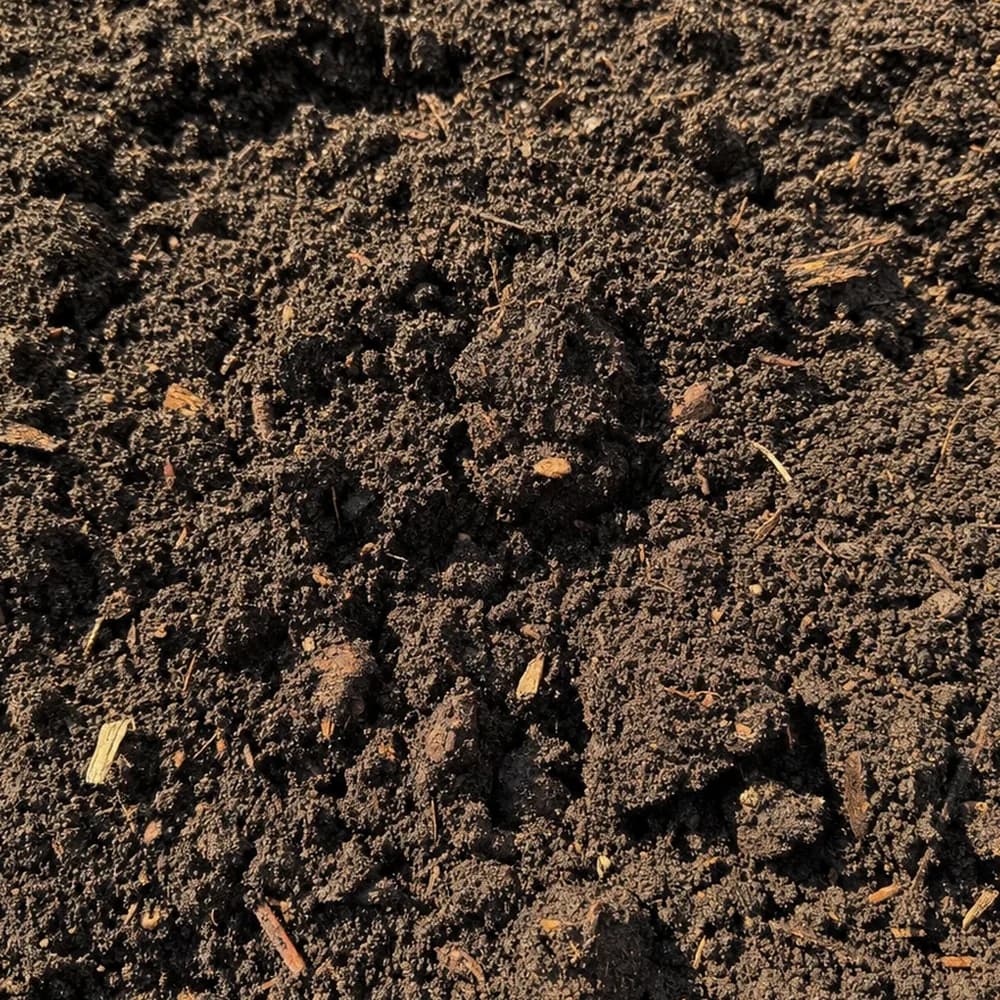
Garden Soil is topsoil already blended with compost, and it is the planting layer. It belongs on this page: raised beds, planters, borders and anything being fed. Top Soil is screened natural soil for lawns, finish grading and leveling, and the topsoil calculator carries the lawn depths and the topdressing figures. Fill Dirt is screened subsoil for structure: raising a grade, backfilling, building up low ground. Size that on the dirt calculator, which allows for the way loose fill consolidates. Stack them in that order on any job that needs more than one, with the fill at the bottom and the blend where the roots are. Shredded Mulch goes over the top once the bed is planted, and it is light enough at about 600 pounds a yard that it gets its own tool: the mulch calculator.
Three 4 by 8 Beds, a Two-Layer Planter and a Border Being Fed
Hypothetical sizes, not customer jobs.
Three 4 by 8 beds filled twelve inches deep with garden soil.
- 96 sq ft x 12 / 12 = 96 cu ft
- 96 / 27 = 3.56 cu yd, and at 1.00 that is 3.6 tons
A 3 by 10 planter standing 20 inches tall, built in two layers.
- Fill dirt, bottom 8 inches: 30 sq ft x 8 / 12 = 20 cu ft, so 0.74 cu yd, or 0.89 tons at 1.20
- Garden soil, top 12 inches: 30 x 12 / 12 = 30 cu ft, so 1.11 cu yd, or 1.1 tons at 1.00
A tired 40 by 5 foot border, fed with three inches worked into the top six.
- 200 sq ft x 3 / 12 = 50 cu ft
- 50 / 27 = 1.85 cu yd, or 1.9 tons
That last one is the approach worth taking on worn native ground generally. Three inches blended in uses about a third of what a full replacement would, and roots cross a gradual change far better than they cross a hard line between imported soil and the clay underneath it.
The Tenth of a Bed That Settles Out by June
A compost-heavy blend loses roughly ten percent of its height in the first few weeks as the organic material compacts, and more than that in a bed watered hard. The five percent box does not cover it. Fill new boxes slightly above the rim, water them in, and keep the last wheelbarrow back to top up once rather than ordering a second time in April.
Put the pile on a tarp. Soil stains concrete, and a tarp turns the clean-up into a drag and a fold. When the yardage looks right, set the quantity and a delivery date on the product page. Delivery is arranged at checkout by ZIP code, and the truck needs clear access to a dump spot, which on a bed job usually means the drive rather than the back garden.
Common questions
Does the frame itself count in the area I enter?
No. Soil only fills the cavity, so take your length and width from inside the boards. A box that measures 4 by 8 feet on the outside of inch-and-a-half boards is 3 ft 9 in by 7 ft 9 in inside, which is 29.1 square feet rather than 32, so the outside figure runs you close to a tenth high. On a border with no edging, measure to wherever you intend the soil to stop.
I want cheap bulk at the bottom of a deep box and good soil on top. How do I order that?
As two calculations over the same footprint. Run the lower depth with fill dirt selected, run the upper depth with garden soil, then order both. The example above splits a 20-inch planter into 8 inches of fill and 12 inches of blend that way.
The bed curves around a tree and has no straight side. What do I enter?
Fit two or three rectangles inside the shape so they do not overlap, put them in under multiple areas, and add a small allowance for the curved edges left over. For a circular bed, use circle mode and average two measurements taken across it at right angles.
The old beds are only down a few inches. How do I measure a top-up?
Measure the drop, not the box. Hold a straight edge across the frame, measure down to the soil in three or four places and average them. Three inches down across three 4 by 8 beds is 24 cubic feet, which is 0.89 cubic yards, under a ton of garden soil.
What actually goes wrong if I order too little?
Nothing structural, which is why beds are a forgiving place to be a bit short. You either plant one box and wait, or you spread the shortfall thinly across all of them and end up with beds that settle below the rim by midsummer. Rounding up to the next half yard is usually the cheaper answer.
Related calculators
Beds measured? Soil's a click away.
Garden soil, topsoil and fill dirt by the yard, free delivery included.