Screened Top Soil for Missouri Lawns, Wall Caps and Pond Banks
Finish a Missouri yard with Top Soil after the ground is shaped, so new turf, garden areas, and beds have a smooth growing surface.
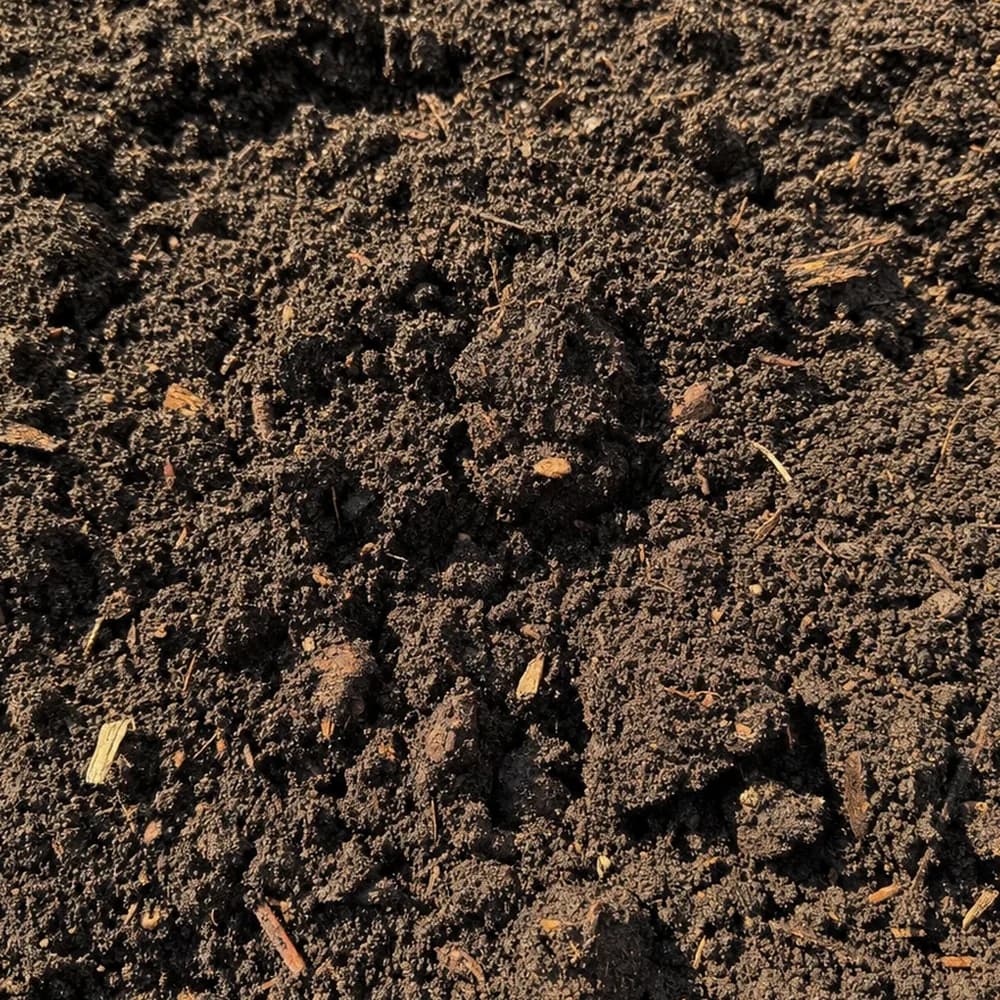
- Size: Screened; free of rocks, debris and large clumps
- Grading: Balanced sand, silt and clay
From $382 for 1 ton, delivery included (larger loads cost significantly less per ton)
Free delivery included
Free delivery anywhere in Missouri
Pick a delivery date
Weekday delivery, earliest Oct 30
“Needed top soil for my yard and this company made ordering smooth, I'm really happy with it and would definitely order again.”
Rachel E. · Verified Buyer
Get a Free Quote
Fill out the form and our sales team will get back to you within the hour.
Size and Grading
- Size
- Screened; free of rocks, debris and large clumps
- Grading
- Balanced sand, silt and clay
Stand at the edge of a low corner on cherty Ozark ground, or on a new-build lot up north where the builder graded the yard with whatever came out of the foundation hole, and the decision in front of you is not which soil to buy. It is how much of that hollow should be soil at all. Top Soil is screened material, free of rocks, debris and large clumps, with a balanced mix of sand, silt and clay, and it is the wrong material to fill a deep hole with. Its job is the top few inches where roots actually live. Everything below that is a different material and a different question.
Two windows a year, and why fall usually wins here
Missouri gives soil work two openings and neither is very wide. The spring one closes on you: heavy clay and claypan stay saturated from winter well into spring across the north and the Bootheel, and by the time the ground is dry enough to work without smearing it, the summer heat is not far behind and a new lawn spends its first months fighting for water.
The late summer into fall window is the easier one for most people. The ground has dried out, there is warmth left in it, and what follows is a cooler, wetter stretch rather than a hotter one. Work stops for good once the ground freezes in midwinter. The exception is the Bootheel, where winters are the mildest in the state and sandy ground dries out sooner than the heavy clay beside it, which widens the spring end a little.
Whichever window you take, do not spread soil on ground that is wet enough to shine. Working saturated clay ruins its structure, and you will be looking at the result for years.
Breaking a claypan or a builder's scrape before a yard goes down
The ground underneath decides how well the new layer performs, and in Missouri it is usually one of two problems.
On the flat prairies of the north and northeast there is a tight claypan not far down, and water perches on it. Spreading soil straight onto that gives you a shallow pan that drowns in a wet spring and cooks in July. Break it up first, rip or fork it several inches deep so the new layer and the old one can knit, and get the surface water heading somewhere before you start.
On a graded building lot the problem is machine traffic rather than geology. The subsoil has been rolled hard by tracked equipment, and construction debris is usually in it. Rake the debris off, loosen the surface, and then spread. On cherty Ozark upland you have the opposite complaint, thin stony ground, and there the new layer is doing most of the growing work on its own, so err on the generous side of the depth.
Capping wall backfill, a pond bank and a gate entrance scar
Three finishing jobs come up again and again, and each one wants the soil in a different place.
Behind a retaining wall, none of this goes in as backfill. The drainage stone and the compacted zone do the structural work. Soil is the cap on top of that, a few inches of it, graded to shed water away from the wall rather than into it, and it is what the bed or the strip of grass along the top is planted into.
On a pond or shoreline edge, the useful move is a grass buffer above the waterline, because a mown or planted strip slows runoff before it reaches the water. Keep the soil above the wet line. At the waterline itself, where a Missouri farm pond rises and falls through a wet spring, soil simply leaves, and that edge is a job for RipRap.
When a construction entrance at a field gate comes out, the ground under it is compacted hard and salted with stone. Pull the stone off first, rip the compaction, then bring the level back up. Most of that lift should be Fill Dirt, with screened soil only in the top few inches.
Yardage for a 40 foot wall cap and 60 feet of pond bank
Volume first, weight second. A 40 foot wall with a three foot cap at six inches deep is 40 x 3 x 6/12, or 60 cubic feet, and 60 divided by 27 is 2.2 cubic yards.
A grass buffer 60 feet along a pond bank and eight feet wide at four inches is 60 x 8 x 4/12, which is 160 cubic feet, or 5.9 cubic yards.
The gate scar, 30 feet by 20 at four inches of finishing soil, is 30 x 20 x 4/12, or 200 cubic feet, which is 7.4 cubic yards. Note that the fill going in underneath it is a separate order and usually the larger one.
This site publishes about 2,200 lb per cubic yard for screened topsoil, roughly 1.10 tons to the yard and approximate, so those three come out at 2.2 x 1.10, about 2.4 tons for the wall cap, 5.9 x 1.10, near 6.5 tons for the pond buffer, and 7.4 x 1.10, about 8.1 tons for the gate scar.
Soil ships by the ton, so run the cubic yards through the topsoil calculator to get an order weight. Keep the five percent extra it adds by default if the ground is uneven, then pick a quantity and a delivery date on this page.
What the first year does to a fresh layer of Top Soil
It settles, and more than people expect. A four inch layer spread loose in September will not be four inches the following May, so if a level surface matters, spread slightly proud and plan on a light topping after the first winter. Freeze and thaw cycles, which run all winter across most of the state, do a lot of that settling for you.
The second thing is weeds. Screened soil is screened for stones, not for seed, so the first season brings a flush of whatever was dormant in it. Mulch on beds keeps most of it down and holds moisture through a hot Missouri summer, which is what Shredded Mulch is for. On a new lawn, mowing is the control.
The third is water. A new layer over a broken-up claypan takes a season to settle into the old ground, and until it does it dries faster than the yard around it. If the drop spot is going to be a problem, whether the truck can reach the back of the property, or whether the pile has to land on the drive and be wheelbarrowed in, say so through the contact page when you order. Delivery is arranged at checkout from your ZIP code, and the truck needs clear access to somewhere it can tip.
Quickly Calculate How Much You Need
Material: Top Soil
How to Measure
Measure the length and width of your project area in feet
Decide on depth in inches (2" for landscaping, 4" for driveways)
Enter the values above and we'll calculate the tonnage you need
Need help figuring out the right amount? We can help!
Call or text us at (314) 501-6558 and we'll help you calculate the right quantity for your project.
Not sure how much you need? The Topsoil Calculator has depth guides, coverage charts and worked examples for this material.
Frequently Asked Questions About Top Soil
Customer Reviews
Ordered top soil from this company, ordering was simple and the price felt fair for what I got.
Paul D. · Lee's Summit, MO · Verified Buyer
Had an easy time ordering, and the top soil was exactly what I needed.
Frank W. · Lee's Summit, MO · Verified Buyer
Went with these guys for top soil and the top soil was spot on. Delivery was easy, price felt fair, and I'd definitely order from them again.
Brian G. · Lee's Summit, MO · Verified Buyer
Needed top soil for my yard and this company made ordering smooth, I'm really happy with it and would definitely order again.
Rachel E. · Kansas City, MO · Verified Buyer
Good start for new grass
I spread this over a reseeded patch of lawn. It was easy to rake out and gave the new grass a good start. It was a practical choice for the job at my Kansas City, MO home.
Skyler V. · Independence, MO · Verified Buyer
Top Soil has 5 verified customer reviews with an average rating of 5 out of 5.