Fill Dirt for Raising Missouri Grades and Backfilling
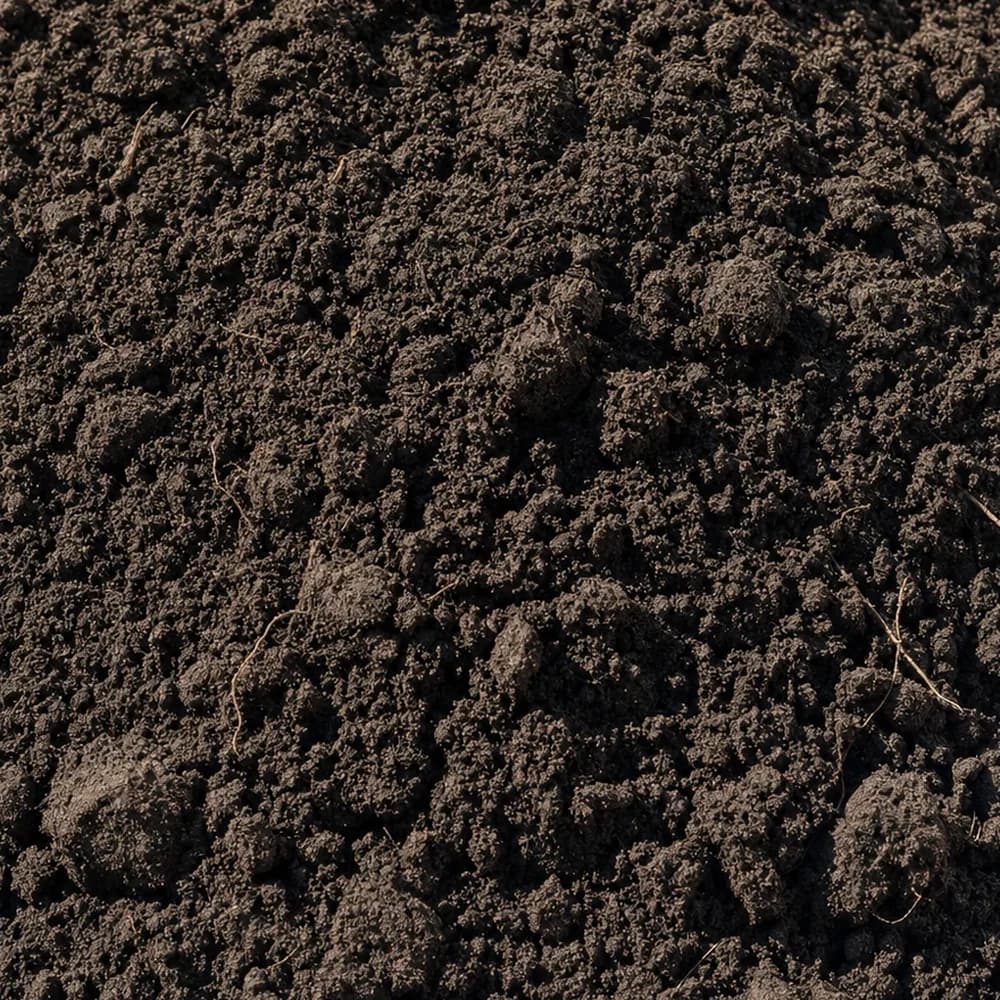
Missouri yard-drainage projects often start by correcting low ground. Fill Dirt provides compactable earth for grading and backfill.
- Size: Screened to remove large rocks, roots and debris
- Grading: Minimal organic matter
From $250 for 1 ton, delivery included (larger loads cost significantly less per ton)
Free delivery included
Free delivery anywhere in Missouri
Pick a delivery date
Weekday delivery, earliest Oct 30
“Got fill dirt from Missouri Rock Supply and ordering was a breeze. Delivery showed up when they said it would, and I'm really happy with how it all turned out.”
Amanda S. · Verified Buyer
Get a Free Quote
Fill out the form and our sales team will get back to you within the hour.
Size and Grading
- Size
- Screened to remove large rocks, roots and debris
- Grading
- Minimal organic matter
A low corner of a northern Missouri yard that ponds every March usually gets topsoil tipped into it first, and topsoil is precisely what makes the corner sink again. Rich, dark, full of organic matter, it settles as that matter breaks down, so a year later the hollow is back with a healthier crop of weeds in it. Fill dirt is the answer to that mistake: screened earth with minimal organic matter in it, bought to make ground higher and keep it there.
Am I buying dirt or soil, and does the difference actually matter?
It matters more than any other decision on this page.
The verified spec is short. Screened to take out large rocks, roots and debris. Minimal organic matter. That is the whole point of the product: nothing in it to rot, so nothing in it to shrink.
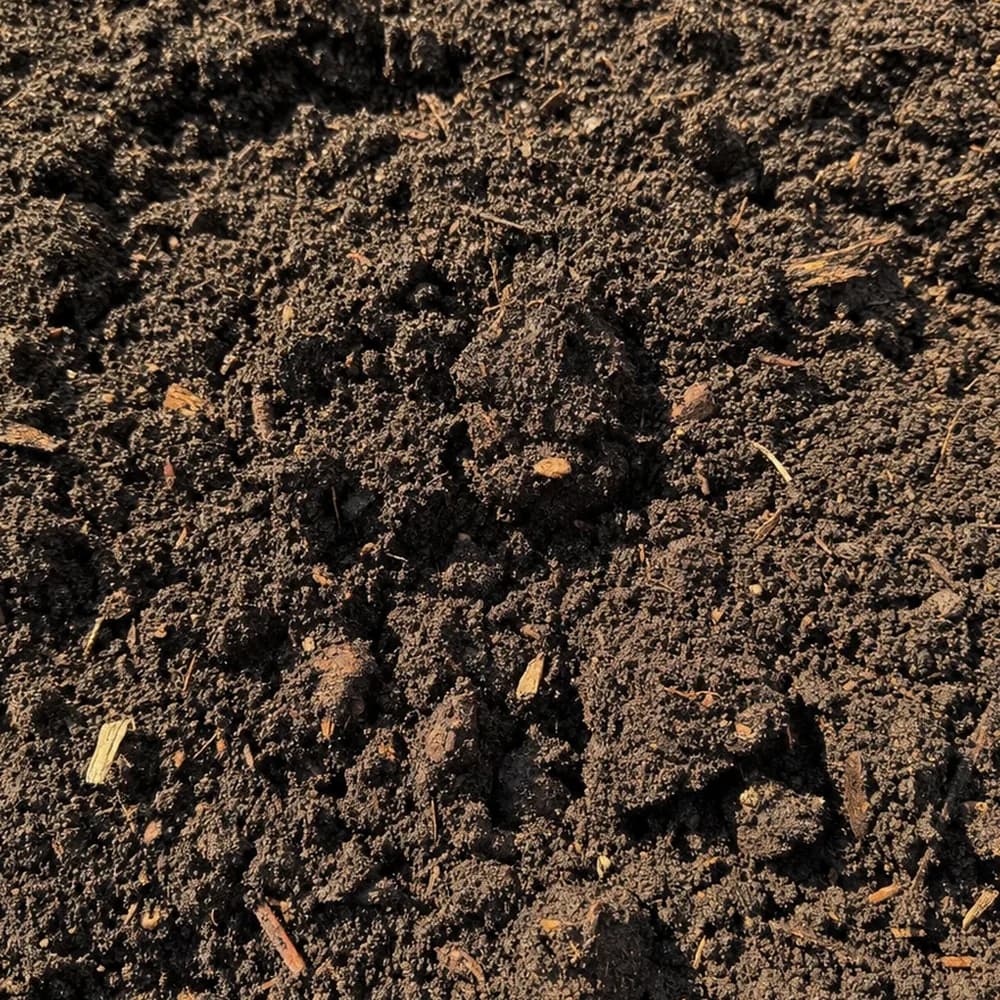
Top Soil goes the other way. It carries the organic content that grass and plants live on, which also means it keeps decomposing after it is placed. Good for the top few inches of a lawn or a bed, wrong for anything under a structure.
So the two are layers in the same job rather than substitutes. Build the shape with the dirt, compact it, then cap with soil where things have to grow.
Can I build a shed pad straight onto fill dirt?
Onto it, not out of it alone, and the sequence matters.
Where the ground has to come up before a shed or a garage pad goes down, this material is what raises it. Strip the topsoil and any turf off first, because building on a soft organic layer leaves the settlement underneath your new work. Then bring the dirt up in lifts of around six inches and compact each one before the next goes on. A plate will do a shed pad; anything bigger wants a roller.
Above that goes the stone. A compacted course of Base Rock or Crusher Run, and on soft northern claypan a separation fabric under it, because clay and stone mix together over a wet winter if nothing keeps them apart.
Frost depth in this state is moderate and set by the local building code, deeper north and toward the Kansas City side than down in the southern Ozarks. If the build has footings, that depth is a code question to settle before the first load is ordered.
Does a rock garden bed need fill underneath, or just fabric?
Depends entirely on whether the bed is being shaped or just surfaced.
A flat bed at existing grade needs no dirt at all. Clear it, lay fabric, edge it and spread the stone.
A bed that is meant to sit proud of the lawn, or a mound built to give a xeriscape planting some relief, is a shaping job and this is the material for the core of it. Build the mound, compact it as you go so it does not slump into a saucer after the first wet spring, then cap the planting areas with soil and set the fabric and the stone over the rest. Using stone alone to build height is expensive and it settles into the ground underneath anyway.
On cherty Ozark ground there is a shortcut worth knowing: the chert is already free draining, so a raised bed there is often about giving roots depth rather than about drainage.
Will it hold a downspout splash area in place?
No, and this is the job where fill dirt gets misused most often.
A downspout is putting a roof's worth of water onto one square yard several times a summer. Bare graded earth in that spot cuts a channel within a season, and on loess ground along the river bluffs it does it faster than that.
What the dirt does is set the shape. Regrade so the ground falls away from the foundation rather than toward it, compact it, and then armor the landing point with stone. River Rock over fabric handles a house downspout, and a roof valley or a barn eave dumping into one corner wants something heavier such as Large River Rock. Dirt builds the fall. Stone takes the hit.
How deep can a lift go before it stops compacting?
Around six inches, and it is worth being strict about it.
A plate or a roller only influences so far down. Tip two feet of dirt into a hole, run a compactor over the top and you have a firm crust over loose material, which settles later and takes whatever is above it with it. Six inch lifts, compacted each time, take longer and hold.
Moisture decides how well it goes. Dirt that is soaked will not compact, it just moves under the plate, which is why the flat claypan ground in the north is hopeless for this work from late fall into spring. Bone dry dirt does not bind either. Late spring through fall is the window here, after the wet season and before the first hard freeze.
Order for settlement as well. Compacted fill occupies less space than the loose dirt that arrives, so the volume you calculate from the hole is not the volume to order. Ten to fifteen percent over is a common working allowance, and any that is left over is useful.
What does a 22 by 16 low spot take, and does wet dirt weigh more?
It does, considerably, and both figures come from this site's own published weights.
Take a low spot 22 by 16 feet, averaging 8 inches deep. That is 352 square feet, and 8 inches is 0.667 feet, so 352 x 0.667 gives 234.7 cubic feet. Divide by 27 and the hole is 8.69 cubic yards.
Dry fill dirt is published here at about 2,400 lb per cubic yard, roughly 1.20 tons to the yard, so that is around 10.4 tons. Wet, the figure goes up to about 3,000 lb per cubic yard, about 1.50 tons to the yard, which turns the same hole into 13 tons. Both are approximate. If you are ordering by weight after a wet week, that difference is the whole reason a load looks smaller than expected when it is tipped.
Raising a 12 by 14 shed footprint by 4 inches, for comparison: 168 x 0.333 is 56 cubic feet, 2.07 cubic yards, about 2.5 tons dry.
Add the settlement allowance on top of either figure and run your own shapes through the dirt calculator, which carries depth guides and a ten percent allowance that is on by default.
Where should the load land on a working farmyard?
Dirt is the one material nobody wants to move twice, and it is the one most often dropped in the wrong place.
Flag the spot before the day. Put it as close to the hole as a loaded truck can safely reach on ground firm enough to hold it, and think about which way you will be pushing it, since a tractor bucket works far better downhill than up. Keep it off anything you still need to drive on, because a dirt pile on a gravel apron leaves a patch of mud there for the rest of the season.
Delivery is arranged at checkout from your ZIP code and the truck needs clear access to somewhere it can tip. Missouri Rock Supply takes the ZIP at that point. Pick a quantity and a date on this page once the grade is pegged out, or raise a soft approach through the contact page beforehand.
Quickly Calculate How Much You Need
Material: Fill Dirt
How to Measure
Measure the length and width of your project area in feet
Decide on depth in inches (2" for landscaping, 4" for driveways)
Enter the values above and we'll calculate the tonnage you need
Need help figuring out the right amount? We can help!
Call or text us at (314) 501-6558 and we'll help you calculate the right quantity for your project.
Not sure how much you need? The Dirt Calculator has depth guides, coverage charts and worked examples for this material.
Frequently Asked Questions About Fill Dirt
Customer Reviews
Ordered fill dirt from these guys and everything went smooth. The driver was friendly and careful about where he placed it, really happy with the whole thing.
Ryan T. · Columbia, MO · Verified Buyer
Needed fill dirt for a low spot in my yard and Missouri Rock Supply made it super easy. The free delivery was a nice bonus, and the fill dirt was just what I needed.
Rob J. · Independence, MO · Verified Buyer
Great Experience
I had a great experience with Missouri Rock Supply. The fill dirt suited the project perfectly. I am happy with the result and would recommend them.
Jennifer C. · Lee's Summit, MO · Verified Buyer
Got fill dirt from Missouri Rock Supply and ordering was a breeze. Delivery showed up when they said it would, and I'm really happy with how it all turned out.
Amanda S. · Independence, MO · Verified Buyer
Fill Dirt has 4 verified customer reviews with an average rating of 5 out of 5.