Drain Rock for Missouri Foundation Runs and French Drains
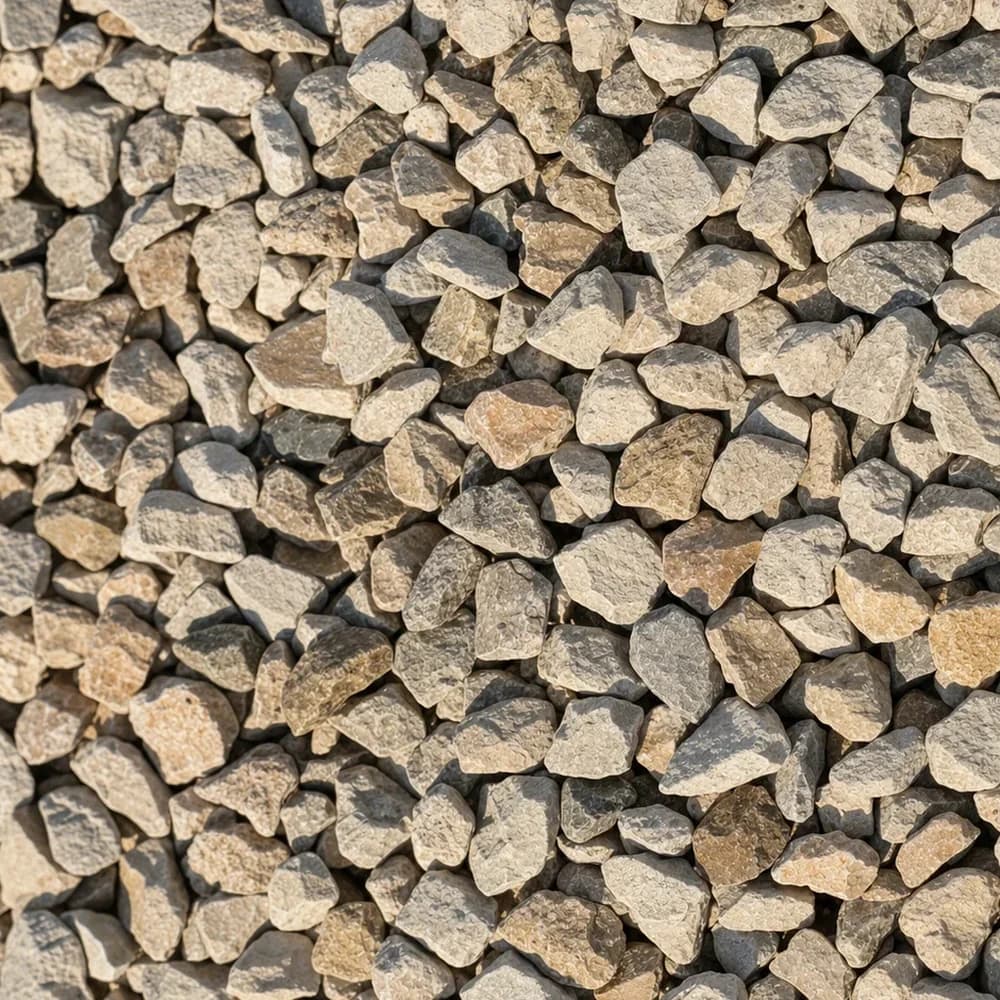
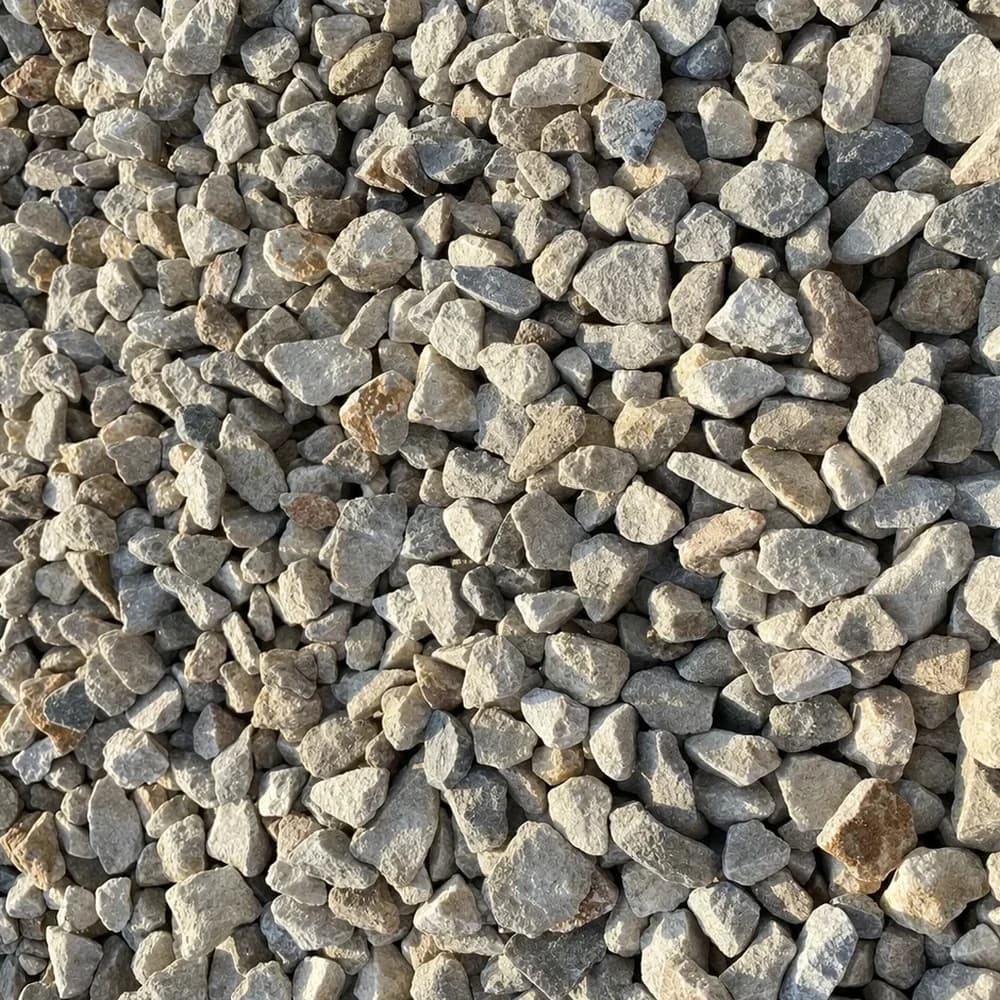
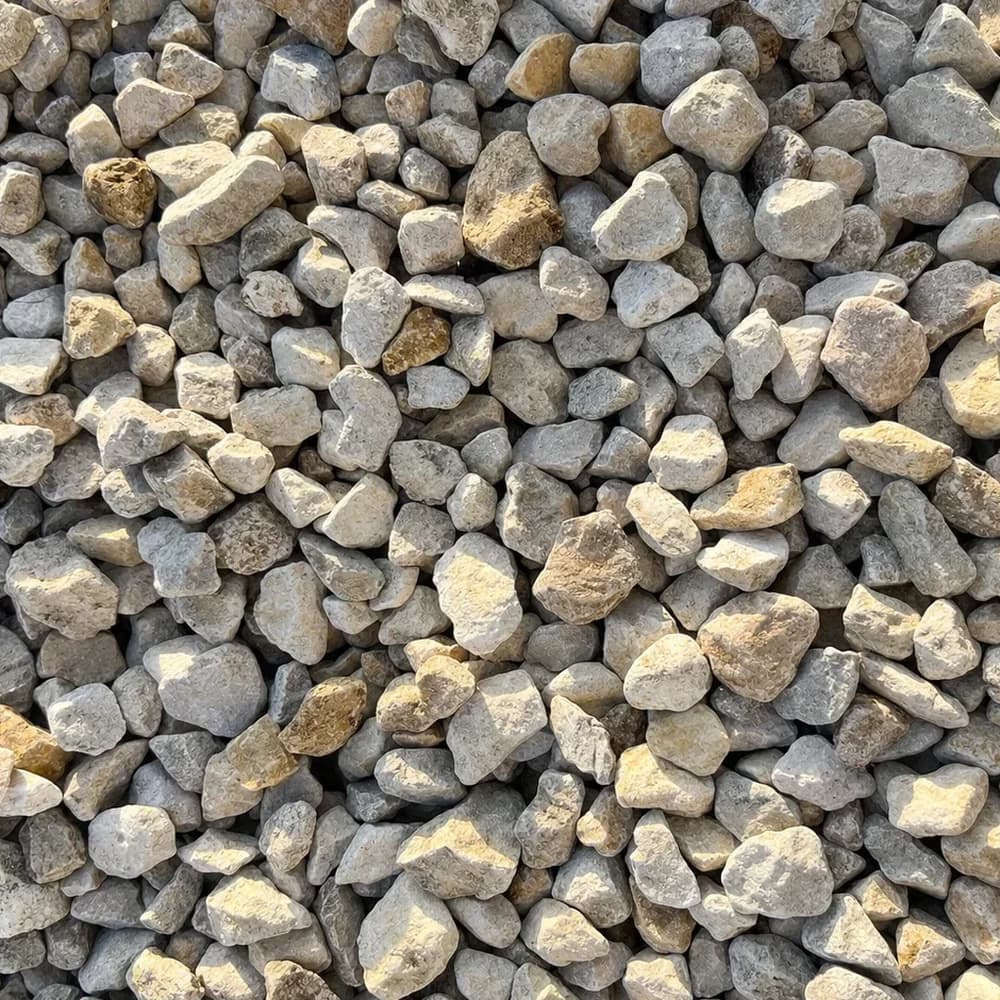
Once placed, angular Drain Rock interlocks while retaining open spaces for Missouri yard drainage, wall backfill, and other water-moving work.
- Size: 3/4 inch to 1-1/2 inch
- Grading: Washed to remove fines and dust
- Type: Rounded or angular varieties
From $386 for 1 ton, delivery included (larger loads cost significantly less per ton)
Free delivery included
Free delivery anywhere in Missouri
Pick a delivery date
Weekday delivery, earliest Oct 30
“Decided on drain rock from the team and I'm really happy with how it all went. Pricing was fair, delivery was easy, and I'd definitely order again.”
Dave L. · Verified Buyer
Get a Free Quote
Fill out the form and our sales team will get back to you within the hour.
Size and Grading
- Size
- 3/4 inch to 1-1/2 inch
- Grading
- Washed to remove fines and dust
- Type
- Rounded or angular varieties
A house cut into an Ozark hillside gets water arriving sideways. Rain lands on rock and thin cherty soil uphill, finds the first thing that will take it, and follows the cut around the foundation until something lets it out. On the northern claypan the problem comes from the opposite direction: water sits on the clay instead of soaking through, and a wall spends four months of every year with wet ground pressed against it. Both of those are what drain rock is bought for, and both of them punish a run built with the wrong stone.
The crawlspace that smells every March, and the wall that sweats
The symptoms show up late and always in the same order. A damp line low on a basement wall in February. A crawlspace that smells of wet ground by March. A sump that used to run occasionally and now runs most of the spring. Outside, a bed against the house that stays soggy a week after everyone else's has dried.
None of that is the stone's job to fix on its own. What water needs is somewhere to go and a clear route to get there, and a trench packed with washed stone is the route. The stone matters because the whole thing depends on empty space. Take a graded material with dust in it, bury it, and the first heavy spring rain washes those fines down into the voids where they set. The trench is then a buried line of damp rock.
The verified grading here is 3/4 inch to 1-1/2 inch, washed to take the fines and dust out, in rounded or angular varieties. That washing is the entire product.
How washed 3/4 to 1-1/2 inch stone sits in claypan, chert and Bootheel silt
Angular or rounded is the first choice to make, and it depends on what is going on top.
Where soil or backfill will sit above the layer, take the angular material. The broken faces wedge against each other and hold the structure open under the weight. Rounded stone under load can settle and close up. Rounded is for the exposed feature, a channel or a basin you can see, where it looks like it belongs in a yard.
The ground changes what the run has to do. On the northern prairies and the west-central clay, water perches above a dense subsoil, so the trench must be cut deep enough to reach below where it sits and must carry to an outlet, because the surrounding ground will not take it. On cherty Ozark ground over limestone the water moves fast and unpredictably, and some of it drains underground through openings in the rock, so what a run needs there is a defined outlet you have chosen rather than one the geology picks. In the Bootheel and along the big rivers the ground is flat, deep silt and clay, and water leaves slowly through ditches, so an outlet with any fall at all is worth walking the site for before a spade goes in.
Opening a trench beside a foundation and closing it properly
Order of work, which is where most of these runs are won or lost.
Cut the trench to a consistent fall toward the outlet, checking with a level rather than an eye, since the fall is small and a hollow in the bottom becomes a silt trap. Line it with fabric, taken up both sides with enough spare to fold right over the top later.
A shallow bed of stone in the bottom, then the pipe, laid with the perforations to the underside so water enters from the water table rather than from rainfall above. Stone up and around and over the crown, several inches of cover. Fold the fabric closed over the whole package so soil cannot migrate in.
Then backfill and, just as important, get the ground above sloping away from the house. A perfect trench under a bed that pitches toward the wall is a trench you will dig up again.
Under a hot tub pad, beneath a dog run, and the turnaround that wants something else
Three jobs come up constantly, and this stone does two of them.
A hot tub pad on heavy ground sits on a lot of water. The slab or the paver base needs a free-draining layer under it and a route for that water to leave, and washed stone at this size does the draining well. What it cannot do is carry the load on its own, so the structural course and the leveling layer still go above it.
A side-yard dog run is the same shape of problem. Dogs, mud and a shaded strip that never dries make a combination nothing fixes permanently, but a drainage layer of washed stone under a finer surface gets the standing water out. Put something kinder on top, since this size is hard going for paws and for a wheelbarrow both.
A turnaround or a parking pad is the one to send elsewhere. Vehicles want a graded material that compacts, and that is Base Rock or Crusher Run in lifts. Clean stone under a turning tire rolls, pushes out to the edges and leaves a hollow in the middle.
What silt and roots do to buried drain rock over five springs
A drain line ages in two ways and both are slow enough to be invisible until the spring it stops working.
Silt is the first. Fine sediment in the water works into the top of the stone and gradually closes it, which is what the fabric wrap is really there to delay. It is not permanent protection, and a run that takes muddy surface water from a bare slope will silt faster than one collecting groundwater.
Roots are the second. A drain line is a reliably damp corridor and willow, silver maple and anything else thirsty will find it. Keep a run away from the trees you can, and accept that one near a mature tree has a life rather than a lifetime.
Upkeep is mostly at the ends. Keep the outlet clear of leaf litter and mown grass, walk it after the first big storm of the season, and check the ground above has not slumped into a channel that feeds surface water straight down into the trench.
Tons for 55 feet of perimeter run and a dog run drainage layer
Two hypothetical jobs.
A perimeter run 55 feet long, trenched 18 inches wide, with 14 inches of stone in it: 55 x 1.5 x 1.167 gives 96.25 cubic feet. Divide by 27 and that is 3.57 cubic yards. This site publishes no separate weight for this material, so use the closest listed family, the #57, #67 and 3/4 inch crushed stone row at about 2,800 lb per cubic yard, roughly 1.40 tons to the yard. That is approximate and a touch light, since this grading runs coarser at the top end. On that figure, 3.57 x 1.40 is close to 5 tons.
A dog run 10 by 24 feet with a 4 inch drainage layer under the surface course: 240 x 0.333 is 80 cubic feet, 2.96 cubic yards, about 4.1 tons.
The live product routes its quantities to the river rock calculator, which carries the depth guides and coverage charts for this material. Once the trench is dug and the figure looks right, set an amount and a delivery date on this page.
Quickly Calculate How Much You Need
Material: Drain Rock
How to Measure
Measure the length and width of your project area in feet
Decide on depth in inches (2" for landscaping, 4" for driveways)
Enter the values above and we'll calculate the tonnage you need
Need help figuring out the right amount? We can help!
Call or text us at (314) 501-6558 and we'll help you calculate the right quantity for your project.
Not sure how much you need? The River Rock Calculator has depth guides, coverage charts and worked examples for this material.
Frequently Asked Questions About Drain Rock
Customer Reviews
Ordered drain rock from Missouri Rock Supply and loved that the delivery was free. It showed up right on schedule, and I'm really happy with how easy the whole thing was.
Eric W. · Independence, MO · Verified Buyer
Ordered drain rock from them, they kept me updated the whole time and the driver was friendly and careful about where he placed it.
Karen T. · Kansas City, MO · Verified Buyer
Picked up drain rock from this company and I'm really happy with it, the drain rock was solid material and exactly what I needed.
Gina C. · Independence, MO · Verified Buyer
Decided on drain rock from the team and I'm really happy with how it all went. Pricing was fair, delivery was easy, and I'd definitely order again.
Dave L. · O'Fallon, MO · Verified Buyer
Decided on drain rock from them and it was exactly what I needed. Ordering was no fuss, and the delivery went smooth. Really happy with how it all turned out.
Stephanie K. · Kansas City, MO · Verified Buyer
Drain Rock has 5 verified customer reviews with an average rating of 5 out of 5.