#67 Stone: Small Washed Rock for Missouri Drains and Bases
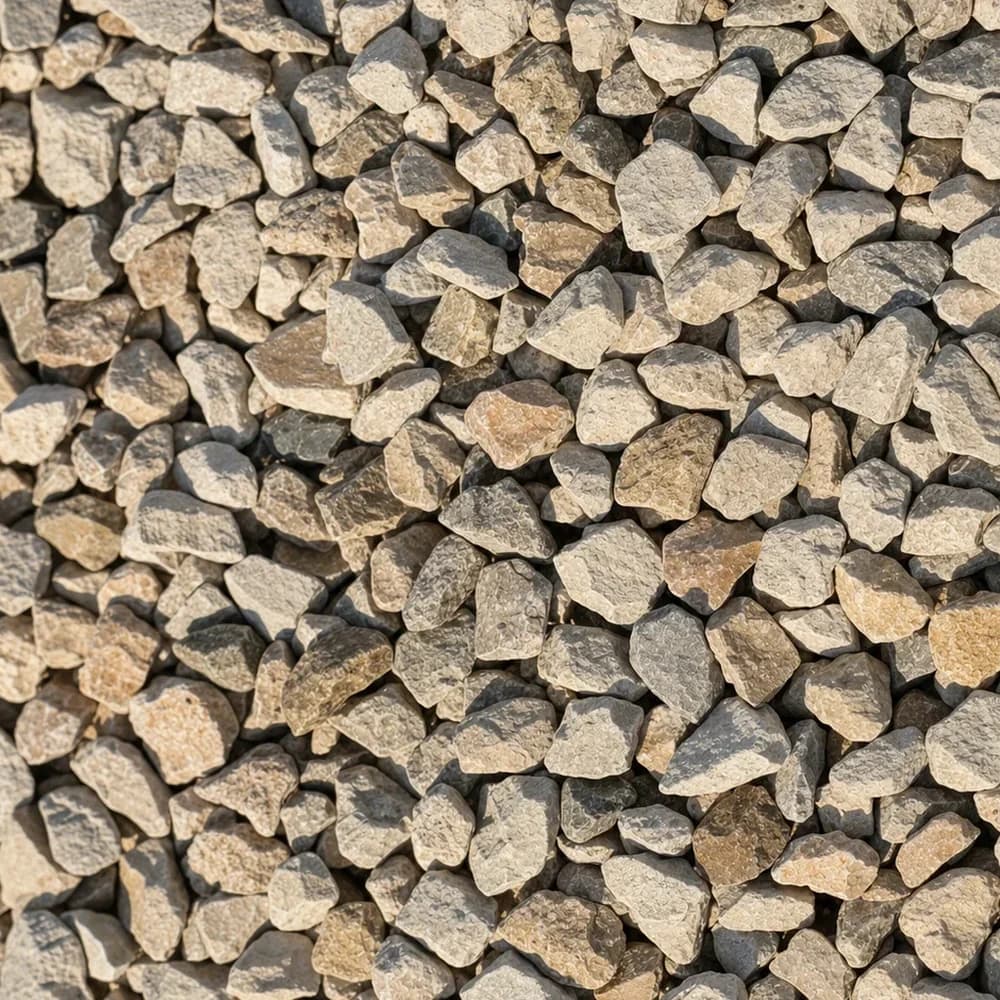
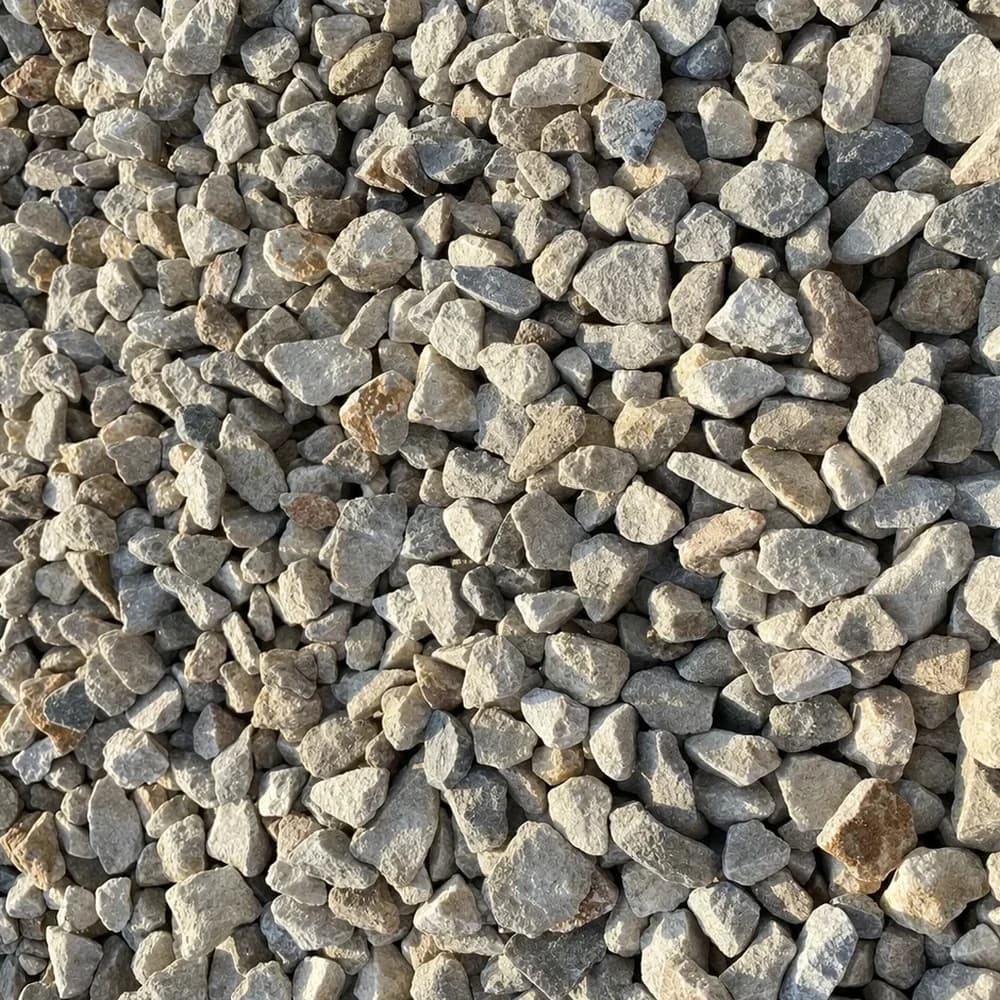
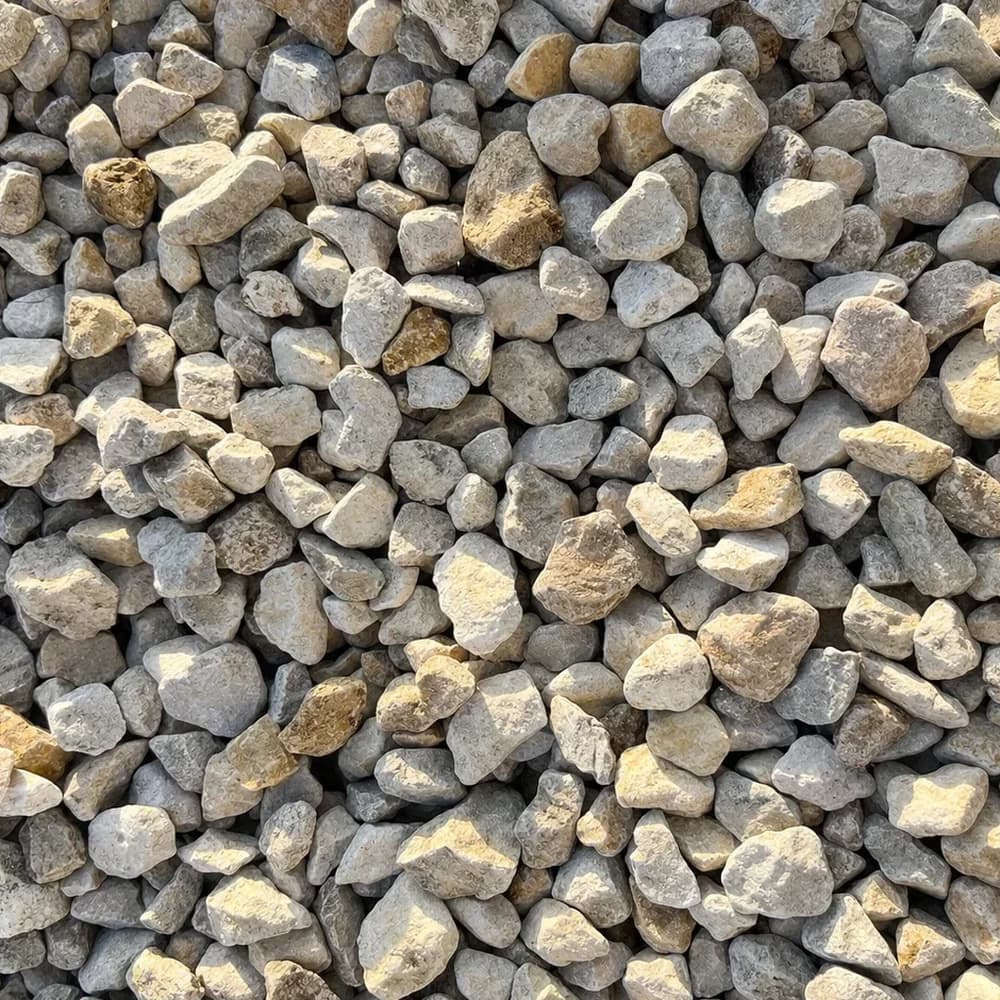
#67 Stone helps move water through drainage areas while giving Missouri landscape surfaces a clean, uniform appearance.
- Size: 1/4 inch to 3/4 inch
- Grading: #67
- Type: Angular crushed stone
From $453 for 1 ton, delivery included (larger loads cost significantly less per ton)
Free delivery included
Free delivery anywhere in Missouri
Pick a delivery date
Weekday delivery, earliest Oct 30
“Ordered stone from Missouri Rock Supply and the price felt really fair for what I got. Free delivery was a nice bonus, and everything showed up right when I needed it.”
Susan W. · Verified Buyer
Get a Free Quote
Fill out the form and our sales team will get back to you within the hour.
Size and Grading
- Size
- 1/4 inch to 3/4 inch
- Grading
- #67
- Type
- Angular crushed stone
Run a hand into a fresh pile and the first thing you notice is that nothing sticks to your palm. The pieces are angular, sharp-cornered, roughly 1/4 inch at the small end and 3/4 inch at the large, and there is no dust binding them together. Tip a bucket of water over the pile and it vanishes straight through. That single behavior is what this material is for, and it is why a Missouri trench dug into claypan behaves completely differently once it has #67 stone in the bottom of it.
Next to a pile of 1 inch clean, the differences you can see
Set the two side by side and the gap is smaller than the product numbers suggest. Both are washed, both are angular limestone or dolomite, both have the fines taken out. The difference is the size spread. #57 tops out around an inch and reads as chunky in the hand. #67 runs a shade smaller and tighter, so it sits flatter, packs a little more closely, and leaves slightly smaller voids between pieces.
In practice that makes #67 the better fit wherever the space is tight or the surrounding material is fine: a narrow trench, the bed under a small pipe, a concrete mix that wants a smoother finish. Where the job is bulk drainage through a wide bed, or bridging a soft spot in a lane, the larger grade earns its place instead. Both of them are what a Missouri yard means by clean rock, and neither has anything in common with base rock.
Under a 12 by 18 patio on ground that will not drain
The claypan and glacial till north of the Missouri River perch water above a dense subsoil for months at a time, and so does the heavy clay in the Bootheel. A patio built over that on a fines-bound base has nowhere to send rain, and what it does instead is hold it, freeze it and lift the pavers.
The open-graded alternative uses washed stone all the way down: a compacted layer of #67 as the base, a thin choker course of fines or a bedding layer over it, then the pavers. Water passes through the surface, moves sideways through the stone, and leaves at a drain or a daylight edge. It needs separation fabric underneath on soft ground, and it needs somewhere for the water to go, but it does not turn to soup in a wet March.
Pipe and cable bedding runs on the same logic. Small washed stone conforms around a line without abrading it, supports it evenly, and lets moisture drain away from the installation instead of pooling against it.
Lining a dry creek that only runs after a thunderstorm
An Ozark storm can drop an inch in twenty minutes and send that water straight off a rocky slope into whatever channel exists. A dry creek bed dresses and protects that route.
#67 works as the underlayer of one. Lay fabric on the shaped channel, then a course of this stone as the working bed, and it will take the flow, hold the shape and let water through rather than around. What it should not be is the visible top of a channel that runs hard, because at 3/4 inch and under, a real storm flow will move it. Size the top course to the water: larger washed stone or rounded river rock where it digs, and this material below and at the quiet edges.
Where #67 Stone leaves a fire pit surround uncomfortable
The mismatch worth naming is the seating area. Angular washed stone around a fire pit looks tidy on day one and is unpleasant to live with. It is sharp underfoot, it shifts because there are no fines to lock it, and chairs sink into it. Anyone barefoot on it in July will tell you about it.
A surround people actually use wants either pavers bedded on Screenings, or rounded 3/8" Natural Pea Gravel if you want loose stone. Keep #67 for the jobs where drainage matters more than comfort.
Depth in a trench and under a base, quoted compacted
A washed stone barely compacts, which changes how you read a depth. A French drain in Missouri clay is typically a trench with fabric, a few inches of stone, the perforated line, then stone over the top to within a few inches of the surface. Those are placed depths and they will settle perhaps a fraction of an inch, not the several inches a fines-bound material loses.
Under an open-graded patio base, plate the stone anyway. It will not densify the way crusher run does, but the pieces will seat against each other, and that seating is what stops the surface dipping later. Quote four inches compacted on firm cherty ground and more where the subgrade is soft. Anything on soft or wet ground gets separation fabric first, and on the tight claypan of the northern prairies the drain has to have an outlet, because fabric stops mixing but it does not dry anything out.
Splitting an odd-shaped bed into shapes you can measure
The one that stops people is a bed that is not a rectangle. Break it up. A 12 by 9 foot rectangle is 108 square feet. A triangular corner 9 feet along the base and 6 feet deep is half of 9 times 6, so 27 square feet. A half circle of 4 foot radius is half of pi times 16, about 25 square feet. Added together that is 160 square feet.
At four inches, 160 divided by 3 gives 53.4 cubic feet, and 53.4 divided by 27 is 1.98 cubic yards. This site publishes about 2,800 lb per cubic yard for #67 and the crushed stone family around it, roughly 1.40 tons per yard, so that is about 2.8 tons.
A worked drainage example for comparison: a dry creek line 30 feet long and averaging 4 feet wide at four inches is 120 square feet, 40 cubic feet, 1.48 cubic yards, and about 2.1 tons. Both are hypothetical.
The stone calculator will do the same sum with depth guides and a five percent allowance on by default, which is worth keeping on an uneven channel. If your shape is awkward enough that you would rather have someone check the numbers, send the dimensions through the contact page and ask for a quote by email before you commit to a quantity.
Quickly Calculate How Much You Need
Material: #67 Stone
How to Measure
Measure the length and width of your project area in feet
Decide on depth in inches (2" for landscaping, 4" for driveways)
Enter the values above and we'll calculate the tonnage you need
Need help figuring out the right amount? We can help!
Call or text us at (314) 501-6558 and we'll help you calculate the right quantity for your project.
Not sure how much you need? The Stone Calculator has depth guides, coverage charts and worked examples for this material.
Frequently Asked Questions About #67 Stone
Customer Reviews
Ordered stone from Missouri Rock Supply and the price felt really fair for what I got. Free delivery was a nice bonus, and everything showed up right when I needed it.
Susan W. · Kansas City, MO · Verified Buyer
Decided on stone from this company and it was spot on.
Dana C. · Lee's Summit, MO · Verified Buyer
Decided on stone from them and it was exactly what I needed. They kept me updated the whole time, and everything went really smooth.
Tom H. · Kansas City, MO · Verified Buyer
Grabbed a load of stone from them and it was exactly what I needed. Driver was friendly and careful about where he placed it, which I really appreciated.
Karen A. · Kansas City, MO · Verified Buyer
#67 Stone has 4 verified customer reviews with an average rating of 5 out of 5.