Washed Sand: Clean Coarse Grit for Missouri Slabs and Trenches
Keep Washed Sand apart from Missouri excavation soil when preparing concrete forms, trench bedding, selected backfill, or leveling.
- Size: Coarse-grained
- Grading: Washed; free of clay, silt and organic debris
From $615 for 1 ton, delivery included (larger loads cost significantly less per ton)
Free delivery included
Free delivery anywhere in Missouri
Pick a delivery date
Weekday delivery, earliest Oct 30
“Went with the team for washed sand and I'm really happy with how it turned out. Pricing was fair, delivery was smooth, and I'd definitely order again.”
Luis D. · Verified Buyer
Get a Free Quote
Fill out the form and our sales team will get back to you within the hour.
Size and Grading
- Size
- Coarse-grained
- Grading
- Washed; free of clay, silt and organic debris
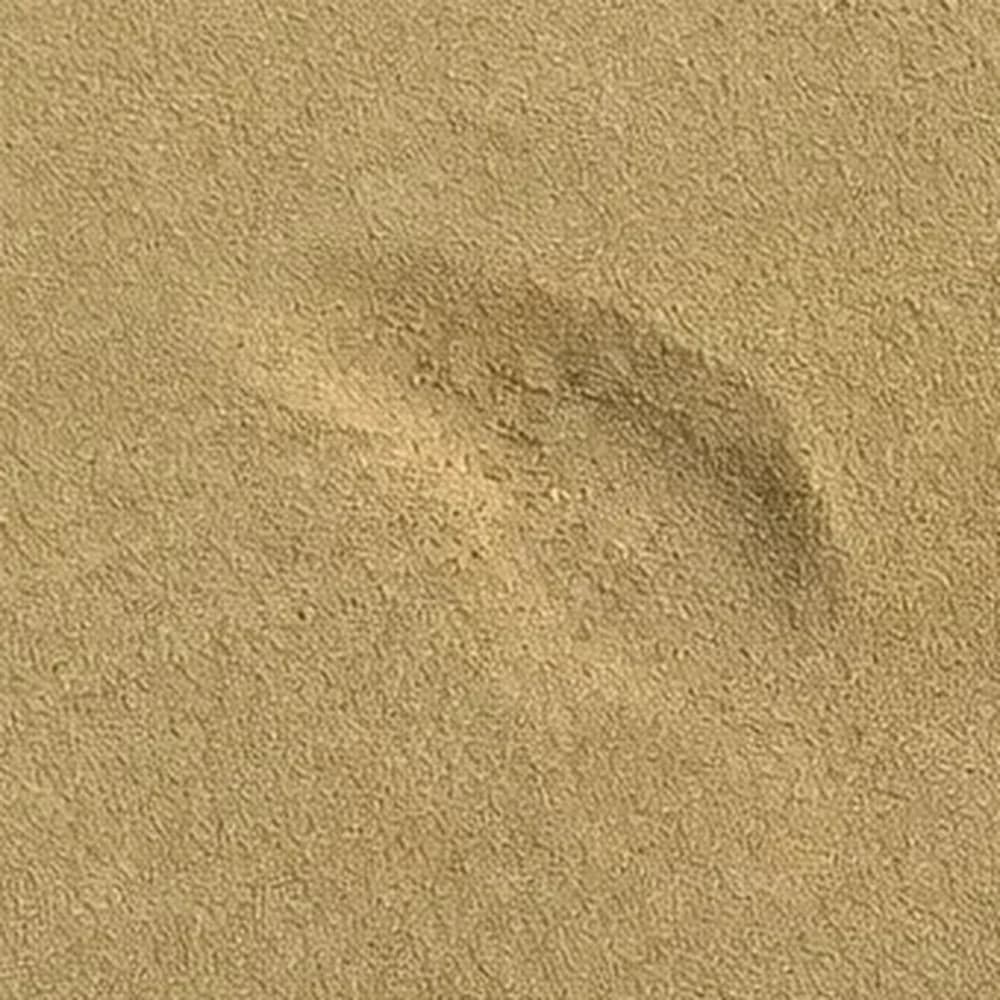
Take a handful off a fresh pile and the grains have edges you can feel. Rub it between finger and thumb and it rasps rather than slides. Squeeze it damp and it holds a loose shape, then falls apart the moment you open your hand, because there is no clay in it to make it stick. That is the whole specification in a gesture: washed sand is coarse-grained, with the clay, silt and organic debris taken out, which is exactly what you want when the alternative is the wet gray clay that came out of the trench you are about to fill.
Coarse, gritty and pale once the pile dries out
Wet from the wash, the pile looks dark and heavy. Give it a day of sun and the top goes pale and dusty while the core stays damp, which catches people out when they judge the whole load by what they can see.
The grains are bigger than you expect if your reference point is a bagged play sand, and that coarseness is deliberate. Bigger, angular grains lock against each other, so a compacted layer holds a level. Fine sand does the opposite: it flows, it holds water, and it finds a way out from under whatever you put on top of it.
Leveling under a 30 by 40 pole barn slab
This is the job that accounts for most of the bulk orders. A pole barn or equipment pad gets its compacted aggregate base first, sized to the ground, and then a thin leveling course of sand goes over it to true the surface before the vapor barrier and the pour.
The sand layer is not structural and should not be treated as if it were. Its job is to take the small irregularities out of a stone base so the barrier lies flat and the slab has an even bearing. Screed it, compact it, check it with a straightedge, and keep it thin. A thick sand layer under a slab is a place for water to sit and for the slab to move.
Concrete and mortar mixing is the other reason a load of this arrives on a Missouri site. Washed sand goes into mixes as the fine aggregate, and the reason the washing matters is straightforward: clay and silt coating the grains interfere with the cement bonding to them.
Trench and pipe bedding when the spoil pile is Ozark clay
Anyone who has dug a utility trench in cherty clay over dolomite, or in the tight claypan up north, knows what comes out: rock, lumps and material that turns to paste in the rain. Putting that back around a pipe is how lines get damaged and how backfill settles for years afterwards.
Bedding with clean sand instead gives the line a uniform seat, conforms around it without abrading the coating, and compacts properly in a confined space. Bring it up the sides and over the crown before the native material goes back in on top.
One caution specific to this state. On claypan and glacial till, a sand-filled trench running through clay is a drain whether you meant it to be one or not. Water will find it, run along it, and come out wherever the trench ends. If that is at a foundation, you have built a problem. Give it an outlet or cut a clay plug near the house.
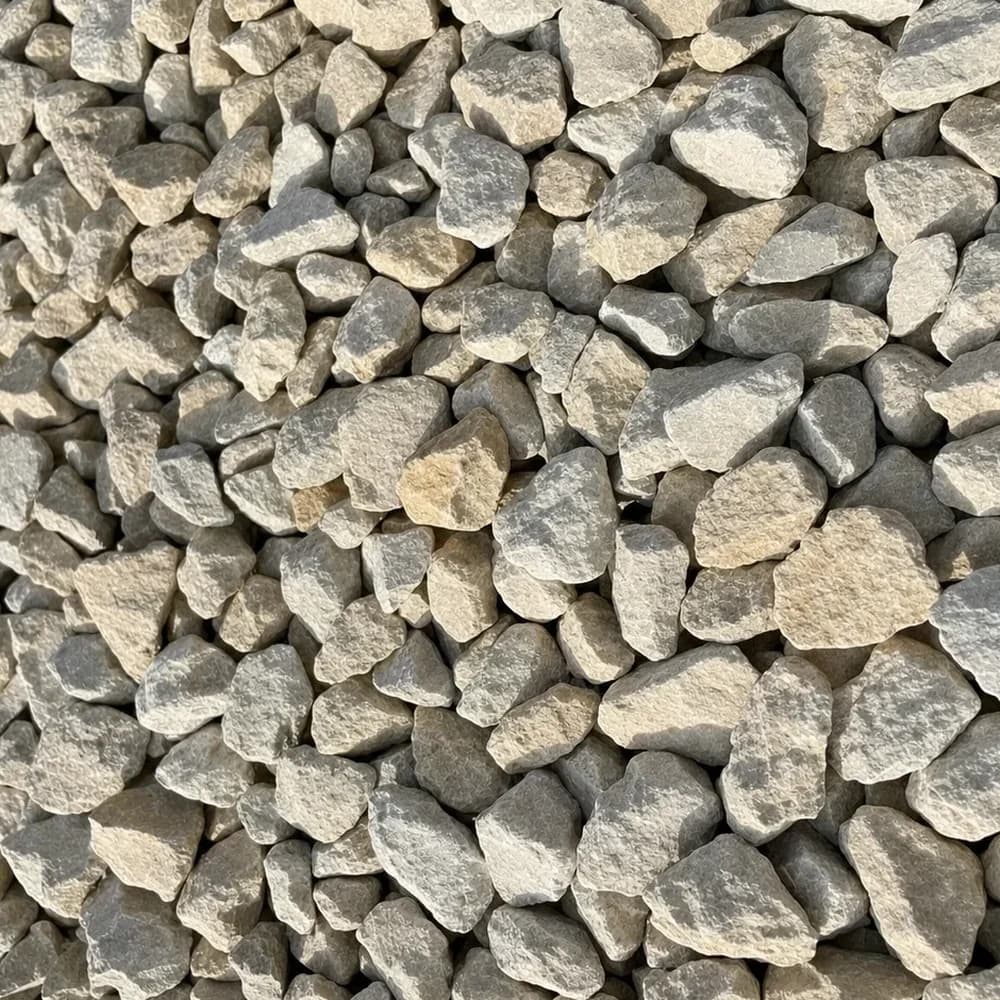
Washed Sand, Mason Sand and a stone screed under flagstone
A flagstone walkway is where the three get confused.
Washed sand is the coarse one, and it screeds flat and compacts well. It is a reasonable bedding choice for large flags on a compacted base.
Mason Sand is finer and softer, which makes it the better pick for mortar work, tight paver joints and play sand, and the worse pick for anything asked to hold a level under load.
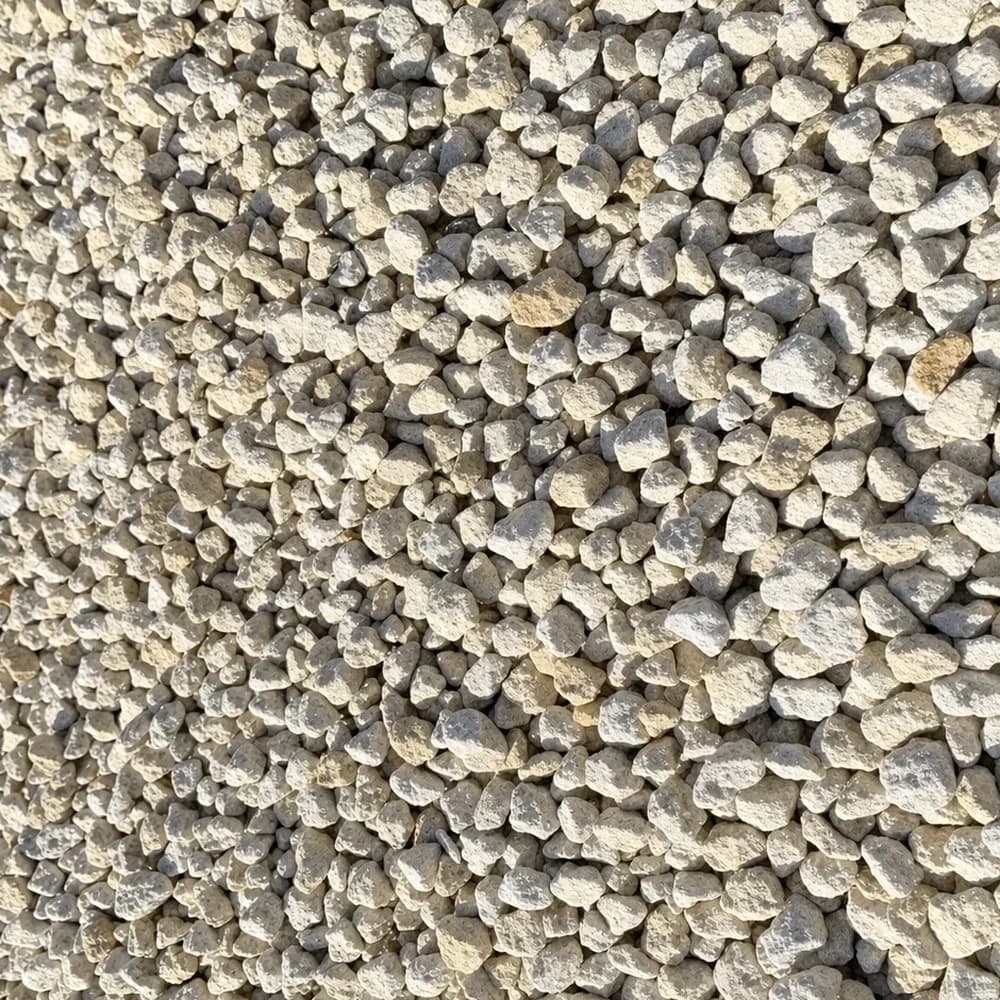
Screenings is not sand at all: 1/4 inch minus crushed stone with its own dust, which locks up hard when wetted and compacted. On any flagstone path that gets real Missouri weather, a screenings bed holds a flag steadier than sand does, because sand washes out from under the edges of an irregular stone over a few seasons and screenings do not.
Why a single-car gravel drive never wants a sand layer
Worth saying plainly, because the question comes up. Sand under a gravel drive gives the stone something soft to sink into. Every tire load pushes the aggregate down and the sand sideways, so within a season the wheel tracks are low, the middle is high, and the surface has stopped shedding water.
A drive is built the other way round: firm subgrade, separation fabric where the ground is soft, a compacted aggregate base, then Driveway Gravel as the surfacing course. Sand has no place in that stack.
Tons for a barn pad course and 45 feet of flagstone bedding
Two hypothetical examples.
A 30 by 40 foot pole barn slab with a two inch leveling course: 30 x 40 is 1,200 square feet, and two inches is one sixth of a foot, so 1,200 divided by 6 gives 200 cubic feet. Divide by 27 and that is 7.41 cubic yards. This site publishes about 2,700 lb per cubic yard for the mason and washed sand family, roughly 1.35 tons per yard, so 7.41 x 1.35 comes out at about 10 tons.
A flagstone walkway 3 feet wide and 45 feet long, bedded at one and a half inches: 135 square feet x 0.125 feet is 16.9 cubic feet, or 0.63 cubic yards, which is about 0.85 tons.
Sand loses a noticeable amount of height when it is compacted, so order to the loose figure rather than the finished one. The sand calculator will run the sums with depth guides and a five percent allowance that is on by default, and there is a paver sand calculator if the job is a bedding course under units.
Once the number looks right, pick a quantity and a delivery date on this page. Delivery is worked out at checkout from your ZIP code, and the truck needs clear access to a spot it can tip on. Sand is worth tarping or tipping onto a hard surface, because a pile left on grass through a wet week takes half the lawn with it when you shift it.
Quickly Calculate How Much You Need
Material: Washed Sand
How to Measure
Measure the length and width of your project area in feet
Decide on depth in inches (2" for landscaping, 4" for driveways)
Enter the values above and we'll calculate the tonnage you need
Need help figuring out the right amount? We can help!
Call or text us at (314) 501-6558 and we'll help you calculate the right quantity for your project.
Not sure how much you need? The Sand Calculator has depth guides, coverage charts and worked examples for this material.
Frequently Asked Questions About Washed Sand
Customer Reviews
Went with the team for washed sand and I'm really happy with how it turned out. Pricing was fair, delivery was smooth, and I'd definitely order again.
Luis D. · St. Louis, MO · Verified Buyer
Decided on washed sand from the team and ordering was simple. Price felt fair for what I got, and the delivery showed up without any hassle. Really happy with it, 5 out of 5.
Susan G. · O'Fallon, MO · Verified Buyer
Grabbed washed sand from this company and it was exactly what I needed. Free delivery was a nice bonus and everything showed up when they said it would. I'd definitely order from them again.
Dave A. · Lee's Summit, MO · Verified Buyer
Grabbed washed sand from these guys and the price felt fair for what I got.
Pat F. · Kansas City, MO · Verified Buyer
Consistent for patio work
This sand was clean and consistent for a small patio project. It spread smoothly and was easy to level. It made the work at my O'Fallon, MO property much more straightforward.
Cameron S. · St. Louis, MO · Verified Buyer
Washed Sand has 5 verified customer reviews with an average rating of 5 out of 5.