Railroad Ballast for Missouri Equipment Pads and Hard Standing
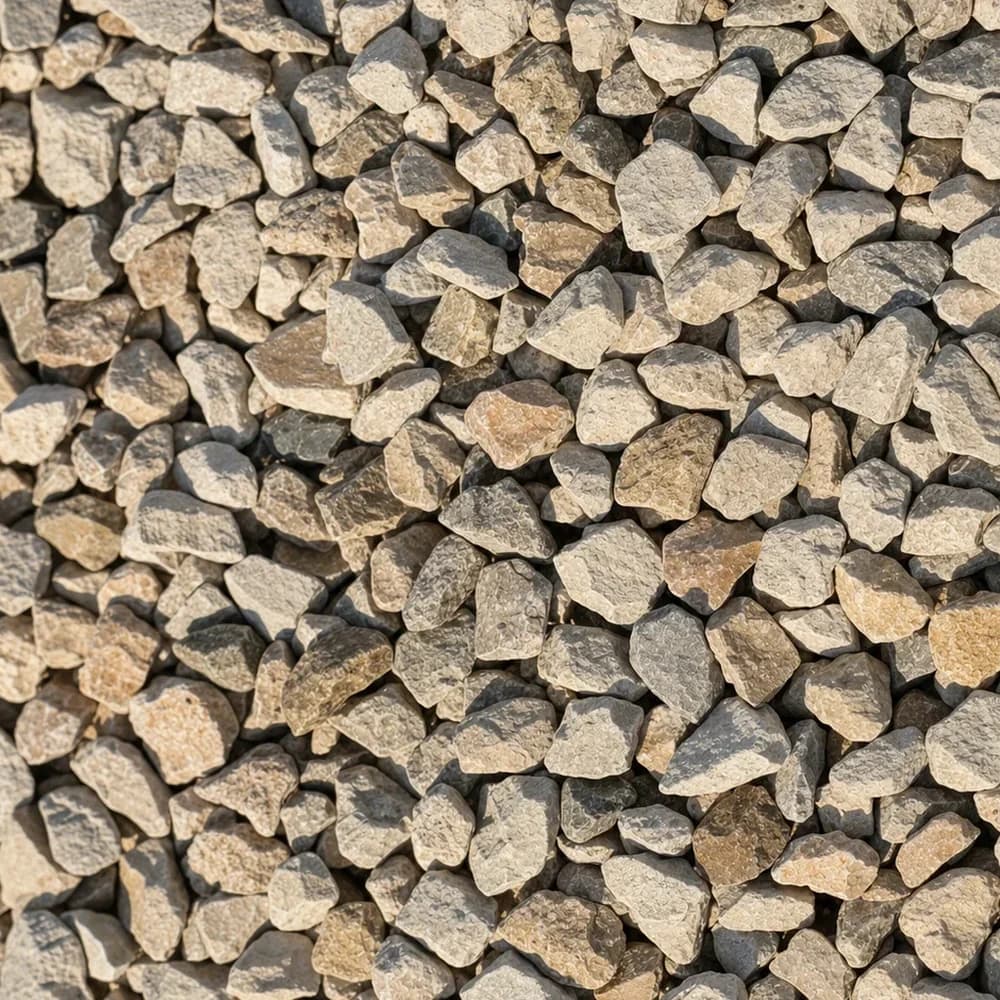
Railroad Ballast gives Missouri work routes and heavy pads a draining stone support course where soil conditions call for drainage under load.
- Size: Roughly 1 inch to 2.5 inches
- Grading: Graded to interlock under load while draining freely
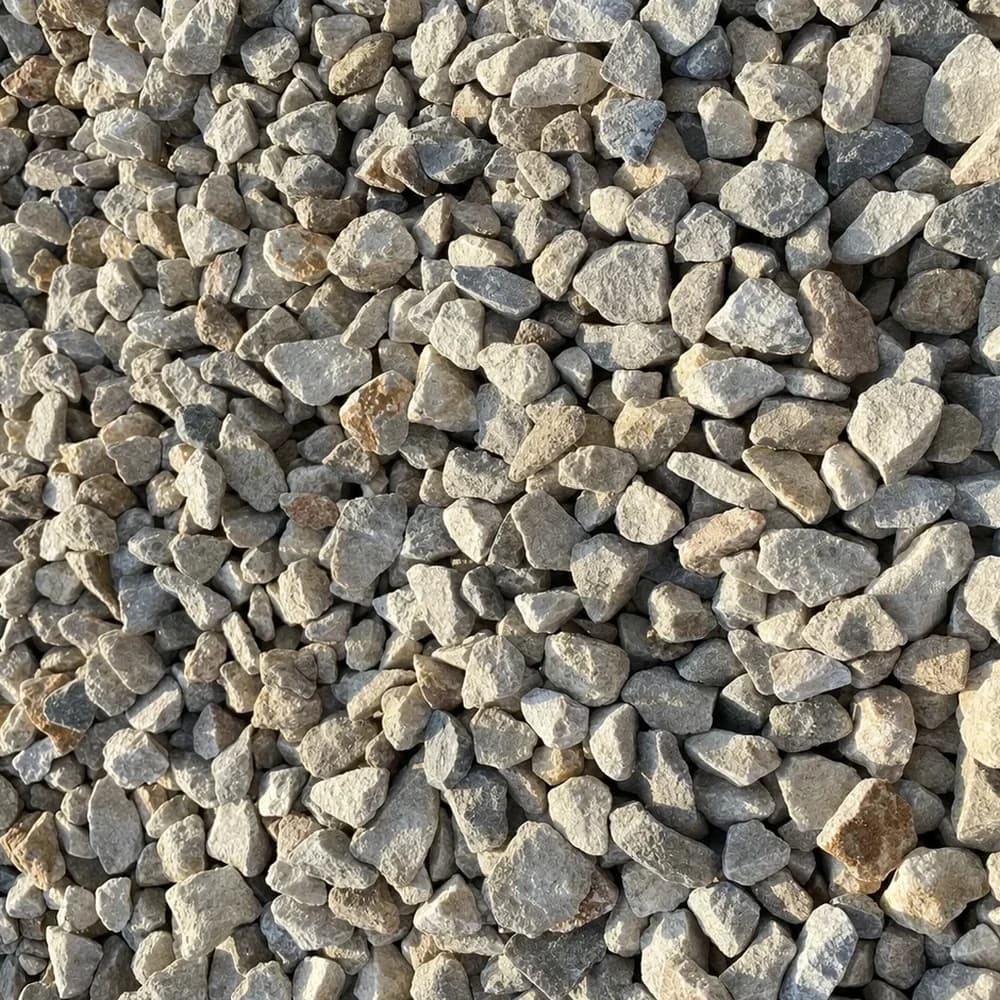
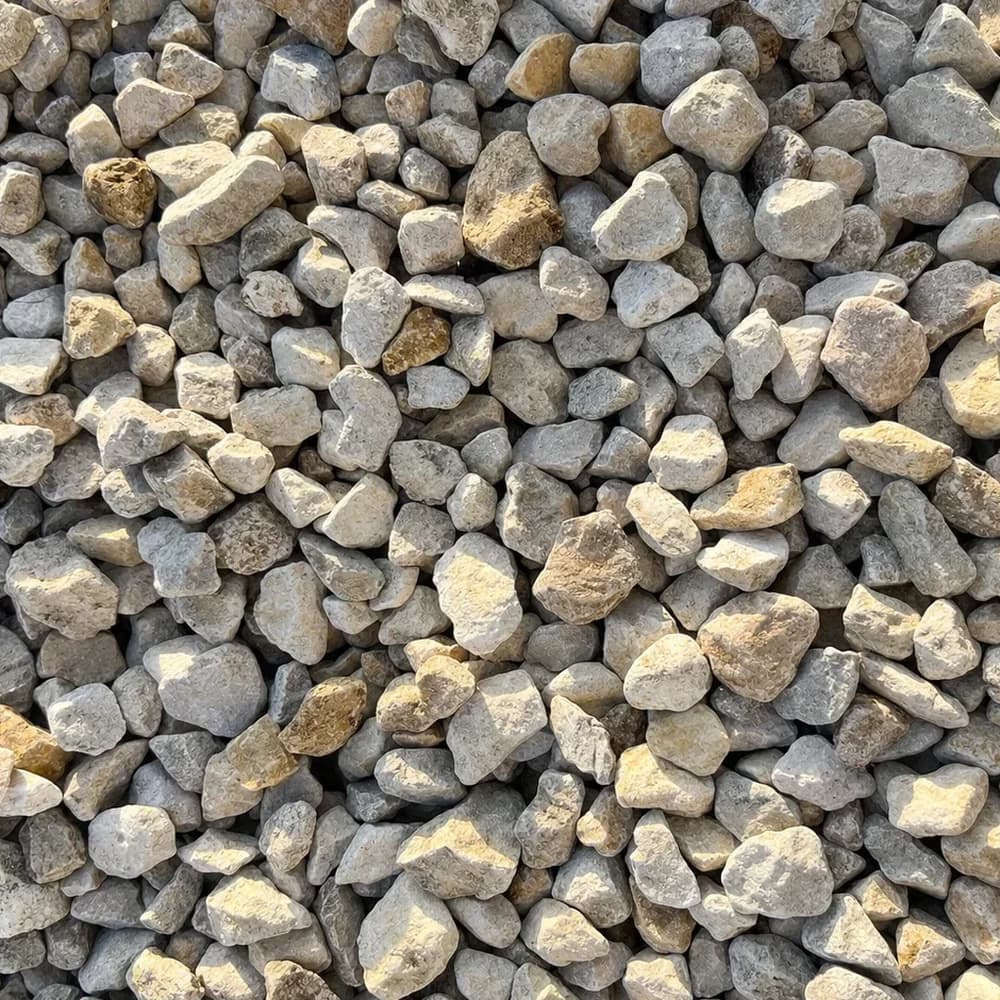
- Type: Large angular crushed stone
From $427 for 1 ton, delivery included (larger loads cost significantly less per ton)
Free delivery included
Free delivery anywhere in Missouri
Pick a delivery date
Weekday delivery, earliest Oct 30
“Needed railroad ballast delivered and this company made it really easy, they kept me updated the whole time. I'm happy with how it went and would definitely order again, recommend them for sure.”
Wendy C. · Verified Buyer
Get a Free Quote
Fill out the form and our sales team will get back to you within the hour.
Size and Grading
- Size
- Roughly 1 inch to 2.5 inches
- Grading
- Graded to interlock under load while draining freely
- Type
- Large angular crushed stone
The order that comes up more than any other is a lot that keeps going soft. A yard where a tractor, a loaded trailer or a grain truck sits and turns, on ground that carries it fine in August and sinks under it in March. That is a load-and-water problem at the same time, which is what railroad ballast is graded for: large angular crushed stone, roughly one inch to two and a half inches, sized so the pieces wedge against each other under weight while water runs straight out through the gaps between them.
The fall order that gets a soft lot through a Missouri winter
Timing is half the job. Across most of the state the working window runs late spring into fall, and it closes for two reasons: frozen ground in midwinter, and ground so saturated after heavy spring rain that nothing can be shaped or compacted. North of the Missouri River that window is narrower, because upland clay stays soft from late fall into spring and January freezes and thaws the ground repeatedly.
That argues for fall on a hard standing job, and it is the opposite of how most people plan it. Waiting until March, when the lot has turned to soup and you are desperate, means building on ground you cannot prepare. Doing the work in September or October, while the subgrade is dry enough to shape, means the layer is seated and settled before the first wet spell tests it. Down in the southern Ozarks the freezes are shorter and a dry stretch in February is genuinely usable, but the principle holds.
Getting a saturated claypan lot ready before 2 inch stone lands
Prep is what separates a pad that lasts from ten tons of rock in a mud hole.
Strip the churned material off rather than rolling over it. What is left should be shaped so water leaves sideways, even if the fall is slight, because a flat lot on the northern prairies will perch water above the clay subsoil all winter no matter how much stone goes on top of it.
Then fabric. On claypan, glacial till and Bootheel clay, separation fabric under the stone is the single detail that decides between doing this once and doing it every three years. Without it the clay works up into the voids under traffic, the layer stops draining, and the pad starts behaving like the ground it was meant to replace.
Cherty Ozark ground behaves differently. Dig past the chert and the bottom is often already firm, so the depth can come down and the money goes into a drainage route instead. Check for sinkholes on karst ground before you commit: a lot that quietly drains into an opening in the bedrock will keep swallowing stone.
Railroad ballast behind a wall, and the pond edge it cannot hold
Two jobs get asked about together, and this material fits one of them properly.
Behind a retaining wall, the drainage chimney against the block needs to carry water down and out fast so it cannot build pressure. Ballast will do that, and on a tall wall with a lot of water behind it the larger voids are an advantage. It is a coarse choice for a garden wall, though, where a purpose-graded Drain Rock or 1 inch clean is easier to place by hand and does the same job. Whichever you use, the chimney is only the collection side. Without a pipe at the bottom running to daylight, you have built a reservoir.
A pond or shoreline edge is where it does not belong. Missouri farm ponds and river banks swing through a wide range in a wet spring, and the zone where water rises, falls and slaps is armoring work. Ballast is heavy but it is not heavy enough: wave action rolls it and a high-water event moves it downslope. That edge wants RipRap, keyed in at the toe. Keep ballast for the access track and the approach above the water line.
A field entrance sized to shake mud off a tire
An entrance off a gravel county road is a good use and a specific one. It stops the gate turning into a wallow, and it knocks mud off tires before they reach the road.
Build it long enough to matter, because a short apron does nothing. Fabric down, then a thick lift of coarse stone tracked in with a machine. The large size is what makes it work: as a tire passes over the stones they flex and move slightly against each other, and that action is what sheds the mud. A finer, tighter material packs smooth and simply gets mud tracked over the top of it. If the entrance needs to be slightly gentler on vehicles, #4 Crushed Stone at 3/4 to 1-1/2 inches is the nearest step down.
Tons for a 40 by 14 entrance and 45 feet of wall drainage
Two hypothetical examples.
An entrance 40 feet long and 14 feet wide at eight inches: 40 x 14 is 560 square feet, and eight inches is two thirds of a foot, so 560 x 0.667 gives 373 cubic feet. Divide by 27 and that is 13.8 cubic yards. This site publishes about 2,900 lb per cubic yard for the ballast and #4 family, roughly 1.45 tons per yard, so 13.8 x 1.45 is about 20 tons.
A drainage zone behind a 45 foot wall, one foot wide and running four feet up: 45 x 1 x 4 is 180 cubic feet, or 6.67 cubic yards, which comes out at about 9.7 tons.
Coarse washed stone barely loses height, so those figures are close to what you end up with rather than optimistic starting numbers. Run your own through the stone calculator and keep the five percent it adds by default where the subgrade is uneven. Before you book, talk through the drop spot on the contact page if the route in is soft, because twenty tons is not a load you want to move twice.
What to walk after the first big storm
A new layer settles into its fabric during the first few heavy rains and then holds. The walk-round afterwards is short.
Look at the edges first: that is where stone migrates, and a shoulder of loose rock along one side usually means the layer is thin in the middle rather than that it has spread. Look for standing water, because a puddle sitting on ballast means the voids below it have silted or the subgrade has pumped. And look at where water leaves the pad. Most failures on Missouri clay are drainage failures wearing a rock costume.
Quickly Calculate How Much You Need
Material: Railroad Ballast
How to Measure
Measure the length and width of your project area in feet
Decide on depth in inches (2" for landscaping, 4" for driveways)
Enter the values above and we'll calculate the tonnage you need
Need help figuring out the right amount? We can help!
Call or text us at (314) 501-6558 and we'll help you calculate the right quantity for your project.
Not sure how much you need? The Stone Calculator has depth guides, coverage charts and worked examples for this material.
Frequently Asked Questions About Railroad Ballast
Customer Reviews
Had railroad ballast delivered by the team and everything showed up right when they said it would. I'm really happy with it and would definitely order again, easy to recommend.
Lisa S. · O'Fallon, MO · Verified Buyer
Decided on railroad ballast from these guys and ordering was simple. Delivery showed up as planned, and I'm really happy with how it all went.
Chris T. · Lee's Summit, MO · Verified Buyer
Needed railroad ballast delivered and this company made it really easy, they kept me updated the whole time. I'm happy with how it went and would definitely order again, recommend them for sure.
Wendy C. · Columbia, MO · Verified Buyer
Got railroad ballast from Missouri Rock Supply and it was exactly what I needed. Delivery was smooth and the pile was clean with no weird junk mixed in. I'd definitely order again and recommend them.
Angela V. · Independence, MO · Verified Buyer
Decided on railroad ballast from these guys and I'm really happy with how it turned out. They kept me updated the whole time and the delivery was easy. I'd definitely order from them again.
Angela N. · O'Fallon, MO · Verified Buyer
Railroad Ballast has 5 verified customer reviews with an average rating of 5 out of 5.
Railroad Ballast delivery across Missouri
- Kansas City
- St Louis
- Springfield
- Columbia
- Independence
- Lees Summit
- Ofallon
- St Charles
- St Joseph
- St Peters
- Blue Springs
- Joplin